Lots of managers badmouth the jobs their staff do. You can draw a direct line from how much the boss validates the staff jobs to how motivated the staff are to do their jobs.
If a manager believes any job is 'beneath' him or her, then the staff won't want to do that job. If a manager believes that the hardest, dirtiest, most complicated task should be their own, then staff will aspire to do the hardest, dirtiest, most complicated task they can. If a manager attempts to use their authority to rest, do less, or have privilege, then the staff will seek to rest, do less, and have privilege.
At camp this is really easy to see and to avoid by action. One tactic I use all the time that works wonders (and is fun to boot!) is to play with kids. If you make it a habit to play with the kids as often as possible as an administrator at camp, then not only does that validate the counselors' role of playing with kids, it helps them visualize what it means to get really good at their jobs - most administrators became administrators because they were really good at the "lower" job. In some jobs and roles it's not practical to go do the work of your entry level staff, which means you have to be much more cognizant of the words you use to describe their role and job, as actions speak much louder than words.
A second valuable tactic for this at camp (and I recognize not everyone would choose this one, but you could pick your own gross/stressful job that you happen to enjoy) is that most days I would jump down in the kitchen and help out a counselor who had the chore of doing the whole camp's dishes. I love the machine efficiency of using an industrial dishwasher, and knew that the dreaded dishes was often something that a new counselor had a lot of apprehension about. If I stepped in and helped out, something they thought would be a drag on their day and take up part of the coveted Rest Hour would instead be done in 20 minutes with little fuss. Knowing your boss has your back, gets your apprehensions, and is willing to get dirty to make sure you have a good day builds loyalty.
Monday, December 19, 2016

Tuesday, December 13, 2016
Using Biases to Win
Whether you're preparing for a meeting, changing your organization, or attempting to corral unruly employees/campers, you will be much more successful if you make use of people's cognitive biases. People like to feel street smart. They like to feel important. They like to believe that they have understood what is going on and have made an informed, intelligent choice based on that comprehension.
If you set things up cleverly, you can take advantage of this and are more likely to get people to choose whatever results you want. In addition to getting the result you desire, you are also giving people a feeling of agency, which enhances their buy-in and perseverance.
For a few marketing examples of decoys, check out this blog post. For a comprehensive and easy to read list of cognitive biases, read this.
I have often found that you can blend together a bunch of biases to get things going your way. Before you jump to some kind of "wow that's manipulative" conclusion - check yourself - this is how we do things all the time, I'm just talking about being more deliberate and increasing your effectiveness. If you genuinely care about people and want the best for you/them/the institution, then you're not being manipulative, you're being effective. Here are a few examples I've found useful over the years:
If you set things up cleverly, you can take advantage of this and are more likely to get people to choose whatever results you want. In addition to getting the result you desire, you are also giving people a feeling of agency, which enhances their buy-in and perseverance.
For a few marketing examples of decoys, check out this blog post. For a comprehensive and easy to read list of cognitive biases, read this.
I have often found that you can blend together a bunch of biases to get things going your way. Before you jump to some kind of "wow that's manipulative" conclusion - check yourself - this is how we do things all the time, I'm just talking about being more deliberate and increasing your effectiveness. If you genuinely care about people and want the best for you/them/the institution, then you're not being manipulative, you're being effective. Here are a few examples I've found useful over the years:
- I take really good notes for each staff member's exit interview each fall/winter. This helps people feel like they are important and that they have a say in how things go.
- Once I have a library of notes, I make sure to quote people to each other as often as possible. This means frequently re-reading the notes and is a time commitment, but people can imagine you quoting things they've said to others, which ensures people feel like they have agency and importance. It also makes people want to be mentioned in the future by you so they will focus more and try harder to impress you or be memorable.
- If I had an idea of a change I wanted to happen, I would ask a bunch of people what they thought about it. After the first person, I would be able to use the quote method mentioned above too! When I instituted the change later on, no one would question it, as most of them had already had a chance to express their opinion - and their opinion was tempered and massaged by the fact that I chose to quote peers whom they respected who agreed with the change or peers whom they didn't respect who disagreed with the change.
- People prefer to be happy - if you emphasize positive aspects of something in a way that expresses how long it will make them happy, they will be more likely to believe you. Since we start and emphasize that "Camp is for the Camper", I will also often mention how what you do with kids this week will stay with them for the rest of their lives. If your extra little bit of effort today results in lifelong positive changes for a kid, you are likely to put in that extra little bit of effort.
- People will take risks to avoid negative outcomes. If a counselor is worried about their cabin not getting along or meshing, they are much more susceptible to suggestions that involve creative solutions. This doesn't work for positive outcomes, if a counselor is optimistic about being able to get their cabin back on track, suggest things that involve less risk. This logic works exactly the same when dealing with a camper - if they are afraid of not making friends they are willing to take more risks to get friends, if they expect to make friends, they will be more likely to respond to suggestions that don't involve as much social risk.
- Say it in a new and inventive way and people will remember it. Say it with a pun or a rhyme or an unusual physical flourish and it will be embedded in people's memories.
Thursday, December 8, 2016
Conflict and Growth
People grow through conflict and discomfort. I was reminded of this recently by a Facebook post showing a lobster shedding its shell only when it grew too big and the pressure too high.
I spent a lot of time thinking about conflict while developing training modules for administrative and counselor training weeks at camp, and I have never come to a satisfactory conclusion about how to teach conflict.
When conducting exit interviews several months after the summer, each year one of the most cited examples of "staff issues" would involve a seminal argument in the staff lounge. I can't identify why it is that these conflicts hold so much power over people's perceptions, though I think there are several connected explanations:
First I think these arguments serve as a shorthand for other issues those people are already having. It's not that disagreeing about feminism (or change, or racism, or politics...) is all encompassing, it's that it embodies the laundry list of faults and unresolved disagreements each person sees in the other. When we don't like or get along perfectly with a person, we can use a public display of disagreement to justify those feelings even long afterwards.
Secondly I think people like things to be resolved. We like there to winners and losers, facts and liars, heroes and villains. When we can cast ourselves as heroically defending truth against some other, we feel good about ourselves. Many of the arguments that got cited were about topics that have no easy resolution, so to feel complete, we retreat to our well-worn opinions.
Thirdly I surmise that most people are bad at the process of conflict, and thus tend to see the argument at irreconcilably far from resolution when it is mostly a matter of viewpoint. I am reminded here of an example in a physics class I took in college that discussed string theory:
Imagine an ant on a power line that can travel along the wire or around it. For the ant those are two distinct dimensions. If we zoom out to street level, we can only observe the ant moving along the wire one way or the other.
Conflict is often zoomed way too far out. If we started in close by using conflict resolution skills like agreeing on what we agree on (usually arguments surround small fractions of things while the core principles are agreed upon), we would tend to see that there are many dimensions of agreement despite the one or two ways we disagree.
I spent a lot of time thinking about conflict while developing training modules for administrative and counselor training weeks at camp, and I have never come to a satisfactory conclusion about how to teach conflict.
When conducting exit interviews several months after the summer, each year one of the most cited examples of "staff issues" would involve a seminal argument in the staff lounge. I can't identify why it is that these conflicts hold so much power over people's perceptions, though I think there are several connected explanations:
First I think these arguments serve as a shorthand for other issues those people are already having. It's not that disagreeing about feminism (or change, or racism, or politics...) is all encompassing, it's that it embodies the laundry list of faults and unresolved disagreements each person sees in the other. When we don't like or get along perfectly with a person, we can use a public display of disagreement to justify those feelings even long afterwards.
Secondly I think people like things to be resolved. We like there to winners and losers, facts and liars, heroes and villains. When we can cast ourselves as heroically defending truth against some other, we feel good about ourselves. Many of the arguments that got cited were about topics that have no easy resolution, so to feel complete, we retreat to our well-worn opinions.
Thirdly I surmise that most people are bad at the process of conflict, and thus tend to see the argument at irreconcilably far from resolution when it is mostly a matter of viewpoint. I am reminded here of an example in a physics class I took in college that discussed string theory:
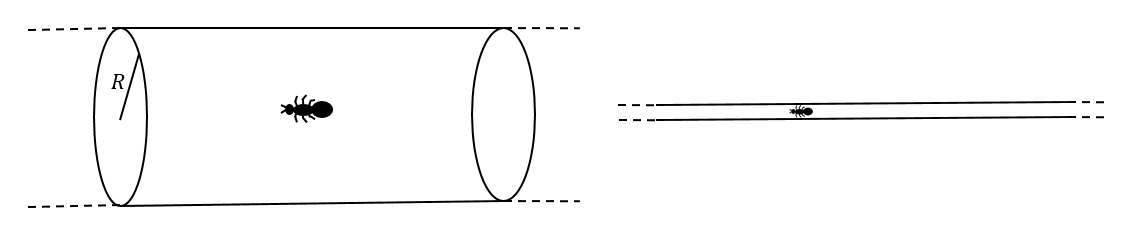 |
| https://brilliant.org/wiki/string-theory/ |
Conflict is often zoomed way too far out. If we started in close by using conflict resolution skills like agreeing on what we agree on (usually arguments surround small fractions of things while the core principles are agreed upon), we would tend to see that there are many dimensions of agreement despite the one or two ways we disagree.
Wednesday, December 7, 2016
Teamwork Combo-Platter
Hire the right combination of people and set up your professional environment correctly and your team has the best chance of producing incredible results.
Today I'd like to talk about creating smaller working groups for a particular project that use individual's personalities and preferences to your advantage.
My dad has done a lot of work with insurance companies analyzing the risk culture they exhibit, and which management strategies are best suited to their individual challenges and existing team. He often talks about the four types of approaches to risk that are most common to managers in insurance companies. I've used a basic version of his logic in helping formulate a lot of the culture I have tried to perpetuate as a manager. In simple terms, the four types of risk approaches outlined in the paper above are articulated in the following diagram:

In case this type of drawing doesn't scream applications at you, here are a few for a camp setting:
Today I'd like to talk about creating smaller working groups for a particular project that use individual's personalities and preferences to your advantage.
My dad has done a lot of work with insurance companies analyzing the risk culture they exhibit, and which management strategies are best suited to their individual challenges and existing team. He often talks about the four types of approaches to risk that are most common to managers in insurance companies. I've used a basic version of his logic in helping formulate a lot of the culture I have tried to perpetuate as a manager. In simple terms, the four types of risk approaches outlined in the paper above are articulated in the following diagram:

- Each summer we take the whole camp on several trips to the beach. This trip is fairly straightforward but carries several health and safety risks. Big worries include losing a kid, a car crash, or inclement weather. Medium risks include injuries (assuming it's like broken arm or less, otherwise, push that one into major worries category!), sunburn, or a venue being difficult. Small risks include scarce or incorrect food, or counselors not doing their job well enough. The leader needs to be someone who will proactively solve minor problems and won't freak out if things start to go wrong. I would put a type 2 person in charge if possible and send a type 1 and type 3 for counsel in emergencies.
- We run several theme days at camp where we transform camp into a particular magical world. This summer one of them was Spooky Halloween themed. These days are planned out over several weeks and incorporate sets, costumes, vignettes, an overarching story line, and often several completely new major activities. The biggest challenges include practical assessments of progress-to-goal in terms of set, writing, and costume construction and lack of buy-in from campers or counselors. For a team of people running one of these days you want a type 3 in charge of the day, with assistance from a type 2 and type 4. You would want the type 2 person to help push the timetables and a type 4 person to help with a lot of the creative engineering of the day. Keep type 1 people busy on smaller, goal-oriented tasks that let them feel stability and believe things are going well, don't let them near the brainstorming meetings if possible.
Friday, December 2, 2016
"I've Never Been Promoted; I've Promoted Myself Several Times Though"

Pushing employees to be their best involves making sure they realize when their decision making and ability to take on responsibility is greater than what they currently do. It's not hard to tell when people are smart or talented enough for more of a challenge, what is hard is making sure that they create opportunities to take charge of things.
Fear of stepping on your boss' toes might make you hesitate to push for more responsibility. However, once you establish a role, you will be expected to do that next time. Your boss isn't going to be upset when they have less work to do, so stop being afraid to take on something.
Recently a Baby Boomer told me a story about an employee of hers (who she doesn't directly manage) who is talented but plateauing. When she asked that employee who would be giving lower level staff performance reviews, the employee said she assumed it would be her boss, even though she directly managed those people. The Baby Boomer told her to just put together materials for the reviews and then when the moment came up, she would be ready to tell her boss "I'll handle this." Then the next time she'll be assumed to be in charge of it.
The Baby Boomer concluded with the powerful thought: "I've never been promoted, I've promoted myself several times though." As a manager it is your job to help your employees with talent and smartsmanship take those moments and grab more responsibility.
Tuesday, November 29, 2016
The Nurturing Father Model
A little while ago I read an article that really hit home with me. You should check it out.
Lots of men harbor a secret about sports - when we see these men perform inhuman feats with their bodies, we know they are using physical discipline to cover for their lack of personhood. This is why no one in sports is surprised or truly tries to fix the brokenness that manifests in domestic violence, rape culture, and misogyny. Deep down so many of us are insecure. We believe that if we fail or show weakness ever, then people will see our inner gollum. We have never learned how to truly care for each other.
I was listening to a country radio show a few weeks ago and the DJs were giving one guy grief because as he was taping his wife and he having a discussion about how sweaty he was at night, it came up that he liked to cuddle. He vehemently denied to the other DJs that he ever wanted to cuddle or instigated it, eventually bowing to audio evidence to say yes once in a while for a few minutes he might be willing to cuddle.
So fragile is our position, so undeveloped is our limbic node that we fear the ground falling out from underneath us with any misstep.
I am left with simply a question and and hope: What can I and we as a community do to help realign our culture to create a nurturing father model? I hope that I can help contribute a sense of unconditional acceptance to those around me as I continue on my journey back to wholeness and rest.
Lots of men harbor a secret about sports - when we see these men perform inhuman feats with their bodies, we know they are using physical discipline to cover for their lack of personhood. This is why no one in sports is surprised or truly tries to fix the brokenness that manifests in domestic violence, rape culture, and misogyny. Deep down so many of us are insecure. We believe that if we fail or show weakness ever, then people will see our inner gollum. We have never learned how to truly care for each other.
I was listening to a country radio show a few weeks ago and the DJs were giving one guy grief because as he was taping his wife and he having a discussion about how sweaty he was at night, it came up that he liked to cuddle. He vehemently denied to the other DJs that he ever wanted to cuddle or instigated it, eventually bowing to audio evidence to say yes once in a while for a few minutes he might be willing to cuddle.
So fragile is our position, so undeveloped is our limbic node that we fear the ground falling out from underneath us with any misstep.
I am left with simply a question and and hope: What can I and we as a community do to help realign our culture to create a nurturing father model? I hope that I can help contribute a sense of unconditional acceptance to those around me as I continue on my journey back to wholeness and rest.
Monday, November 28, 2016
Wordsmithing for Evil or for Good?
William Shakespeare was the consummate wordsmith. I always loved reading his plays in school, and given my penchant for passionate exterpolation, I have never limited myself to preexisting language when expressing myself. A good word play, portmanteau, or entendre can bring a moment from banal to blingin' in a sentence.
But there is danger in creating language too. What we say and how we say it to each other isn't just good fun. I have struggled with finding the hidden misogyny in my language since college (did you notice toughies like sportsMANship? Sometimes hidden misogyny is a manwich, sometimes it's manspread, but misogyny is everywhere man).
Richard B. Spencer is a dangerous man, and a dangerous wordsmith. As the progenitor of the phrase "Alt-Right," and leading voice in the white nationalist and neo-nazi movement, he has committed his life to hate in a way that damages the fabric of our nation. This Chrome ad on has just been created to help you out in correcting the linguistic damage currently being done by Spencer's abhorrent wordsmithing.
If this kind of nomenclature interests you (and you like movies like Pulp Fiction or have read some Sci Fi), I highly suggest you pick up the book Lord of Light by Roger Zelazny. The main character has some incredible moments with regard to how we speak and what we call things - I will leave you with a quote from the book that I believe sums up the danger and the power of words:
But there is danger in creating language too. What we say and how we say it to each other isn't just good fun. I have struggled with finding the hidden misogyny in my language since college (did you notice toughies like sportsMANship? Sometimes hidden misogyny is a manwich, sometimes it's manspread, but misogyny is everywhere man).
Richard B. Spencer is a dangerous man, and a dangerous wordsmith. As the progenitor of the phrase "Alt-Right," and leading voice in the white nationalist and neo-nazi movement, he has committed his life to hate in a way that damages the fabric of our nation. This Chrome ad on has just been created to help you out in correcting the linguistic damage currently being done by Spencer's abhorrent wordsmithing.
If this kind of nomenclature interests you (and you like movies like Pulp Fiction or have read some Sci Fi), I highly suggest you pick up the book Lord of Light by Roger Zelazny. The main character has some incredible moments with regard to how we speak and what we call things - I will leave you with a quote from the book that I believe sums up the danger and the power of words:
No word matters. But man forgets reality and remembers words.
Subscribe to:
Posts (Atom)