Winning in wrestling is about discipline. I learned that lesson over and over again through my time as a high school wrestler and as a coach. For my junior and senior years, our coaching staff was graced by the panther-like presence of a man we called Coach Shoops. We usually had three coaches, our head coach was the middle weight, and then the assistant coaches would be split one for the little guys and one for the big boys. Shoops was big and quick. He weighed around 200lbs and was constantly carrying around a med school textbook as he studied for whatever exam was next.
Shoops had a variety of little techniques he added to my repertoire. Because he was technically sound where I was quirky, and much quicker than I, I don't remember picking up too many larger moves from him. What I did learn was a style of thinking and gamesmanship that helped me win matches.
Like I said, winning in wrestling is about discipline. The head coach, Quilty, made sure we worked hard enough to have physical discipline, and were sufficiently drilled in techniques to have technical discipline. Shoops made sure we were ready to get inside our opponents' heads and grind them into the mat. He made sure we had competitive discipline.
Some of his ideas were a little quixotic, but worked with practice. It took me a while, but eventually I managed to get good at pointing towards an opponent's shoe to make them think it had come untied, so I could strike while their attention was away from defense. One of my favorites of his was The Handshake Maneuver. If you act scared while warming up and then give a dead fish handshake, your opponent will underestimate your confidence and technique. If you are reading a book at the side of the mat and give him the double-handed nerdshake, chances are he will underestimate your strength. If you make exceptional eye contact while shaking hands, he might still be looking when the ref blows the whistle and you can strike first. The Handshake Maneuver was straight up fun for me.
The most effective and hardest of his recommendations was that whenever the whistle blew, no matter the score, run back to the middle of the mat. Some matches this wouldn't have much affect because it would only be at the end of the first and second periods. Other matches you'd be going out of bounds every ten seconds and having to restart over and over.
In those cases, you could win a match simply by running back to the middle. The first time you do it, your opponent might just think it's weird as he staggers/crawls back the 10ft to line up. The second, he might be a little irked by your unnecessary expenditure of energy. By the fifth or sixth, all he's thinking about is what it's going to take to make you break. If your whole team is doing this, you can track the morale of the other team as it sinks further and further. I know from personal experience that it's not easy to run back to the middle. It's even harder if you're losing. But if you can be disciplined enough to do it, you will win the mental battle and eventually, the physical one as well.
I mention all of this because I think if you cultivate discipline in any area, it will give you almost superhuman abilities. This doesn't take skill or money. All it takes is dedication and a desire to perform (and perhaps peers and mentors to help you get back up again when you mess up). If you want your employees to aspire to excellence, you have to teach them the basics and the techniques like Quilty did. You also have to give them the hard-knuckled fight and gamesmanship that Shoops taught.
Showing posts with label strength-building. Show all posts
Showing posts with label strength-building. Show all posts
Friday, January 13, 2017

Saturday, December 31, 2016
Brotherhood and Pain - A Call for Fellowship
I learned a lot through pain as a high school wrestler. That first week of practice each year was a revelation. We would start with warmups that were more intense than an entire soccer practice, drill basic techniques and more advanced counters for 45 minutes or so (never letting the heart rate fall), and then wrestle live until it was time for conditioning. That first week, it would be somewhere during the drilling that I would hit "The Wall" - my physical limit where my body said "I can't do this anymore!" and I would have to push through with mental toughness, visualization of success, and camaraderie from my mat brothers.
Each year I would turn in homework that week with a different handwriting than the rest of the year. My entire body would be so spent from exertion and musce fatigue that no matter how I sat, some portion would be holding me up and twitching from the effort.
Gradually my wall would get pushed farther and farther back. We would do less and less of the drilling and technique and more of the live wrestling. By a month into the season, we would be managing to wrestle live for more than an hour a practice. Together we would push our walls back and fight through sore muscles, head colds, parents who wanted to overfeed us, and all the other problems life can throw at you.
Each time you got your hand raised in wrestling, it brought a compelling feeling of success. Wrestling is a mano-a-mano sport where you are each the same size. Winning means you stand victorious when all you had to rely on was yourself. It is also a team sport.
People not on the team often made fun of us for wrestling. For being homos, for wearing spandex costumes, for caring so much, and for not eating whatever we wanted like the rest of the boys in high school. I had it easy (our team was state champs all four years I was in HS, so critics were kept mostly to snide whispered comments), but I can imagine how it must have felt to have those jokes amplified.
The only other team I have heard described the way I think of my wrestling team is football. With 90 players on the roster and 11 on the field engaging in carefully choreographed plays, you must place your well-being in the hands of your brothers every time the ball is snapped.
We build bonds as men together when we sacrifice, overcome hardship, and ultimately learn that we are stronger through fellowship and mutual reliance than we ever would be alone. We need more wrestling, more football, more fellowship, and more initiations into a common brotherhood.
I do not know what form this future fellowship should take for me, I only know that I am open to it. I will readily embrace the chance to build strong bonds with men in my life and to mentor those younger than I in their journey towards manhood. I am reminded here of two interpretations of manhood that I have considered seminal that lack this sense of mutuality - and hope to find one that does: If by Rudyard Kipling, and It Takes a Man by Chris Young.
Each year I would turn in homework that week with a different handwriting than the rest of the year. My entire body would be so spent from exertion and musce fatigue that no matter how I sat, some portion would be holding me up and twitching from the effort.
Gradually my wall would get pushed farther and farther back. We would do less and less of the drilling and technique and more of the live wrestling. By a month into the season, we would be managing to wrestle live for more than an hour a practice. Together we would push our walls back and fight through sore muscles, head colds, parents who wanted to overfeed us, and all the other problems life can throw at you.
Each time you got your hand raised in wrestling, it brought a compelling feeling of success. Wrestling is a mano-a-mano sport where you are each the same size. Winning means you stand victorious when all you had to rely on was yourself. It is also a team sport.
People not on the team often made fun of us for wrestling. For being homos, for wearing spandex costumes, for caring so much, and for not eating whatever we wanted like the rest of the boys in high school. I had it easy (our team was state champs all four years I was in HS, so critics were kept mostly to snide whispered comments), but I can imagine how it must have felt to have those jokes amplified.
The only other team I have heard described the way I think of my wrestling team is football. With 90 players on the roster and 11 on the field engaging in carefully choreographed plays, you must place your well-being in the hands of your brothers every time the ball is snapped.
We build bonds as men together when we sacrifice, overcome hardship, and ultimately learn that we are stronger through fellowship and mutual reliance than we ever would be alone. We need more wrestling, more football, more fellowship, and more initiations into a common brotherhood.
I do not know what form this future fellowship should take for me, I only know that I am open to it. I will readily embrace the chance to build strong bonds with men in my life and to mentor those younger than I in their journey towards manhood. I am reminded here of two interpretations of manhood that I have considered seminal that lack this sense of mutuality - and hope to find one that does: If by Rudyard Kipling, and It Takes a Man by Chris Young.
Wednesday, December 28, 2016
Millennials Giving Back
As a generation we have a pretty bad rep. Whether it's our parents, employers, or the news, we seem to have been labeled, judged, and receive regular shaming. While I acknowledge much of this judgement is accurate, I think it is much more a reflection on those who came before us than it is a reflection on us. It is our duty to use our circumspection and faults to give back more than we've received.
I didn't choose to get participation trophies at the YMCA as a kid; expecting a seven year-old to refuse a trophy at the end of a season is ridiculous. Those trophies came about as a result of parents demanding that their child was special and so deserved a trophy no matter what. As a child, I, like many people I've talked to, knew that those trophies weren't worth anything. I had two shelves for my trophies, one for the YMCA ones that didn't matter (and even those I had arraigned to put the one or two trophies from "good" teams at the front), and one for the trophies from other sports leagues. This second shelf was much smaller, and its contents far more precious.
Our parents and our parents' generations have let us down in many ways. Complaining about it won't get us anywhere. Pointing it out is a decent step towards realizing what actually is the problem, but is likely to lead to much more awkward visits home that include far less congeniality.
The solution is something that many millennials have already taken to doing - making sure that what we do for a living reflects the values we hold as a generation. While this can mean a hippie approach to living which is unfeasible (or undesirable) for many people, it can also be done in almost any workplace through conscientious adherence to a set of values.
It's a done deal for us millennials that people can be whatever gender they feel fits them most. It's a no-brainer that people should be able to love whomever they love, people are people and love is what saved Harry Potter after all. Millennials are so cynical about institutions and the establishment that it sometimes hurts us, but often it just gives us a highly refined bullshit meter that lets us ignore the partisan hackery coming equally from Fox/Brietbart/Drudge as it does from MSNBC/HuffPo.
Millennials may be ignorant about many facets of world history, husbandry, home ec, or the energy industry. We do, however, know that war kills people and shouldn't be a political tool used by political tools. We do know that large companies who pollute are failing to incorporate the externalities of their products, and that is wrong. We haven't realized yet the tremendous cost of our haphazard destruction of the environment and workers rights because of companies like H&M and Forever 21 - we have yet to learn how to buy and repair quality goods. We can identify the damage and insidiousness of monopoly powers throughout American industries, even if we refuse to label companies like Amazon as such. Our disdain for wealthy liars and the lying politics they employ is massive.
We have not yet come into our own and demanded that the diversity and equality embedded in our values become a permanent part of the American experience. We will soon. Millennials are getting older and our startups are getting bigger. We are getting promotions and starting families, and we won't make the same mistakes our parents did - we will make our own, new, and idiotic mistakes! We won't settle for a status quo that gives so much to so few while leaving so many without a chance to succeed.
The one silver lining about the incoming Donald J. Trump administration came from my father. He said "It would be a shame if whoever comes after him just goes back to doing everything the same way we used to." I agree. I am terrified of the things he will do and the damage that he will cause as our "precedent". But I hold out hope that as we millennials grow up further and take the reins of power from our elders, we will forge a more inclusive, rigorously honest, and caring country. One that looks after its citizens instead of locking them up. One that refuses to let insurance companies determine healthcare policy and demands that all children have a chance to learn a profession and if needed, go to college.
I do not know what I want to "do" with my life. The idyllic notion of joining a company and staying with it for life and pension isn't gone, but it does require sacrifices that many millennials are unwilling to make. If we want to live in a country that embodies our values, we need to be disciplined and over time demand that our governments, institutions, and workplaces reflect those values. The best way for us to give back and deserve the privilege we inherited as 21st century Americans is to demand through our jobs and social lives that our society leap forward to meet our challenges and take advantage of the technological paradise in which we live.
I didn't choose to get participation trophies at the YMCA as a kid; expecting a seven year-old to refuse a trophy at the end of a season is ridiculous. Those trophies came about as a result of parents demanding that their child was special and so deserved a trophy no matter what. As a child, I, like many people I've talked to, knew that those trophies weren't worth anything. I had two shelves for my trophies, one for the YMCA ones that didn't matter (and even those I had arraigned to put the one or two trophies from "good" teams at the front), and one for the trophies from other sports leagues. This second shelf was much smaller, and its contents far more precious.
Our parents and our parents' generations have let us down in many ways. Complaining about it won't get us anywhere. Pointing it out is a decent step towards realizing what actually is the problem, but is likely to lead to much more awkward visits home that include far less congeniality.
The solution is something that many millennials have already taken to doing - making sure that what we do for a living reflects the values we hold as a generation. While this can mean a hippie approach to living which is unfeasible (or undesirable) for many people, it can also be done in almost any workplace through conscientious adherence to a set of values.
It's a done deal for us millennials that people can be whatever gender they feel fits them most. It's a no-brainer that people should be able to love whomever they love, people are people and love is what saved Harry Potter after all. Millennials are so cynical about institutions and the establishment that it sometimes hurts us, but often it just gives us a highly refined bullshit meter that lets us ignore the partisan hackery coming equally from Fox/Brietbart/Drudge as it does from MSNBC/HuffPo.
Millennials may be ignorant about many facets of world history, husbandry, home ec, or the energy industry. We do, however, know that war kills people and shouldn't be a political tool used by political tools. We do know that large companies who pollute are failing to incorporate the externalities of their products, and that is wrong. We haven't realized yet the tremendous cost of our haphazard destruction of the environment and workers rights because of companies like H&M and Forever 21 - we have yet to learn how to buy and repair quality goods. We can identify the damage and insidiousness of monopoly powers throughout American industries, even if we refuse to label companies like Amazon as such. Our disdain for wealthy liars and the lying politics they employ is massive.
We have not yet come into our own and demanded that the diversity and equality embedded in our values become a permanent part of the American experience. We will soon. Millennials are getting older and our startups are getting bigger. We are getting promotions and starting families, and we won't make the same mistakes our parents did - we will make our own, new, and idiotic mistakes! We won't settle for a status quo that gives so much to so few while leaving so many without a chance to succeed.
The one silver lining about the incoming Donald J. Trump administration came from my father. He said "It would be a shame if whoever comes after him just goes back to doing everything the same way we used to." I agree. I am terrified of the things he will do and the damage that he will cause as our "precedent". But I hold out hope that as we millennials grow up further and take the reins of power from our elders, we will forge a more inclusive, rigorously honest, and caring country. One that looks after its citizens instead of locking them up. One that refuses to let insurance companies determine healthcare policy and demands that all children have a chance to learn a profession and if needed, go to college.
I do not know what I want to "do" with my life. The idyllic notion of joining a company and staying with it for life and pension isn't gone, but it does require sacrifices that many millennials are unwilling to make. If we want to live in a country that embodies our values, we need to be disciplined and over time demand that our governments, institutions, and workplaces reflect those values. The best way for us to give back and deserve the privilege we inherited as 21st century Americans is to demand through our jobs and social lives that our society leap forward to meet our challenges and take advantage of the technological paradise in which we live.
Thursday, December 8, 2016
Conflict and Growth
People grow through conflict and discomfort. I was reminded of this recently by a Facebook post showing a lobster shedding its shell only when it grew too big and the pressure too high.
I spent a lot of time thinking about conflict while developing training modules for administrative and counselor training weeks at camp, and I have never come to a satisfactory conclusion about how to teach conflict.
When conducting exit interviews several months after the summer, each year one of the most cited examples of "staff issues" would involve a seminal argument in the staff lounge. I can't identify why it is that these conflicts hold so much power over people's perceptions, though I think there are several connected explanations:
First I think these arguments serve as a shorthand for other issues those people are already having. It's not that disagreeing about feminism (or change, or racism, or politics...) is all encompassing, it's that it embodies the laundry list of faults and unresolved disagreements each person sees in the other. When we don't like or get along perfectly with a person, we can use a public display of disagreement to justify those feelings even long afterwards.
Secondly I think people like things to be resolved. We like there to winners and losers, facts and liars, heroes and villains. When we can cast ourselves as heroically defending truth against some other, we feel good about ourselves. Many of the arguments that got cited were about topics that have no easy resolution, so to feel complete, we retreat to our well-worn opinions.
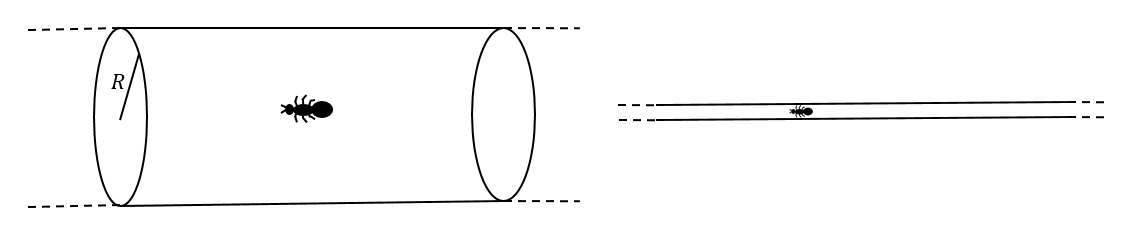
Thirdly I surmise that most people are bad at the process of conflict, and thus tend to see the argument at irreconcilably far from resolution when it is mostly a matter of viewpoint. I am reminded here of an example in a physics class I took in college that discussed string theory:
Imagine an ant on a power line that can travel along the wire or around it. For the ant those are two distinct dimensions. If we zoom out to street level, we can only observe the ant moving along the wire one way or the other.
Conflict is often zoomed way too far out. If we started in close by using conflict resolution skills like agreeing on what we agree on (usually arguments surround small fractions of things while the core principles are agreed upon), we would tend to see that there are many dimensions of agreement despite the one or two ways we disagree.
I spent a lot of time thinking about conflict while developing training modules for administrative and counselor training weeks at camp, and I have never come to a satisfactory conclusion about how to teach conflict.
When conducting exit interviews several months after the summer, each year one of the most cited examples of "staff issues" would involve a seminal argument in the staff lounge. I can't identify why it is that these conflicts hold so much power over people's perceptions, though I think there are several connected explanations:
First I think these arguments serve as a shorthand for other issues those people are already having. It's not that disagreeing about feminism (or change, or racism, or politics...) is all encompassing, it's that it embodies the laundry list of faults and unresolved disagreements each person sees in the other. When we don't like or get along perfectly with a person, we can use a public display of disagreement to justify those feelings even long afterwards.
Secondly I think people like things to be resolved. We like there to winners and losers, facts and liars, heroes and villains. When we can cast ourselves as heroically defending truth against some other, we feel good about ourselves. Many of the arguments that got cited were about topics that have no easy resolution, so to feel complete, we retreat to our well-worn opinions.
Thirdly I surmise that most people are bad at the process of conflict, and thus tend to see the argument at irreconcilably far from resolution when it is mostly a matter of viewpoint. I am reminded here of an example in a physics class I took in college that discussed string theory:
 |
| https://brilliant.org/wiki/string-theory/ |
Conflict is often zoomed way too far out. If we started in close by using conflict resolution skills like agreeing on what we agree on (usually arguments surround small fractions of things while the core principles are agreed upon), we would tend to see that there are many dimensions of agreement despite the one or two ways we disagree.
Friday, December 2, 2016
"I've Never Been Promoted; I've Promoted Myself Several Times Though"

Pushing employees to be their best involves making sure they realize when their decision making and ability to take on responsibility is greater than what they currently do. It's not hard to tell when people are smart or talented enough for more of a challenge, what is hard is making sure that they create opportunities to take charge of things.
Fear of stepping on your boss' toes might make you hesitate to push for more responsibility. However, once you establish a role, you will be expected to do that next time. Your boss isn't going to be upset when they have less work to do, so stop being afraid to take on something.
Recently a Baby Boomer told me a story about an employee of hers (who she doesn't directly manage) who is talented but plateauing. When she asked that employee who would be giving lower level staff performance reviews, the employee said she assumed it would be her boss, even though she directly managed those people. The Baby Boomer told her to just put together materials for the reviews and then when the moment came up, she would be ready to tell her boss "I'll handle this." Then the next time she'll be assumed to be in charge of it.
The Baby Boomer concluded with the powerful thought: "I've never been promoted, I've promoted myself several times though." As a manager it is your job to help your employees with talent and smartsmanship take those moments and grab more responsibility.
Monday, November 28, 2016
Insulate Your Workplace
There are many variables in the world around us. From the social and interpersonal to the physical and environmental, there are thousands of factors that we keep balanced throughout every day of work and life. If, for even a minute, we stopped to consider all of the variables we are juggling, we would become unstuck, so our brains do a good job of hiding all of the calculations and action-reactions going on all the time.
I think that one part of why I enjoyed working at camp so much is that the number of variables shrinks so much that we are able to control more of what goes on around us and choose consciously what we want to do.
For children (who are by necessity discovering the world around them and placing themselves one lego block at a time into an unfamiliar and scary world of variables) there is often little control over most environmental and social aspects of their lives. They don't get to choose their classmates, classes, classrooms, meals, homework, or often much else at all in a normal day.
At camp we let them choose, for hours a day, what to do. Obviously we are limited in some things based on the number of campers and sandbox property. However, the self exploration embedded in our mission statement and daily living provides a great guidepost for how you can motivate your employees in a non-camp setting.
As a manager it is important to give your employees a chance to do meaningful work with people they like. Sometimes there are jobs and chores that have to happen regardless. But there is almost always something for which it makes sense to give latitude to employees for how they pursue the ultimate goal. I would recommend using this type of framework to figure out if something can be made into an insulated work space for self-exploration, realization, and ultimately motivated accomplishment:
I think that one part of why I enjoyed working at camp so much is that the number of variables shrinks so much that we are able to control more of what goes on around us and choose consciously what we want to do.
For children (who are by necessity discovering the world around them and placing themselves one lego block at a time into an unfamiliar and scary world of variables) there is often little control over most environmental and social aspects of their lives. They don't get to choose their classmates, classes, classrooms, meals, homework, or often much else at all in a normal day.
At camp we let them choose, for hours a day, what to do. Obviously we are limited in some things based on the number of campers and sandbox property. However, the self exploration embedded in our mission statement and daily living provides a great guidepost for how you can motivate your employees in a non-camp setting.
As a manager it is important to give your employees a chance to do meaningful work with people they like. Sometimes there are jobs and chores that have to happen regardless. But there is almost always something for which it makes sense to give latitude to employees for how they pursue the ultimate goal. I would recommend using this type of framework to figure out if something can be made into an insulated work space for self-exploration, realization, and ultimately motivated accomplishment:
- Agree on the starting point - meet or brief working group on where you are now.
- Give benchmarks that you require, whether timetables for completion, details about reporting progress, or important components that are required for completion.
- Agree on the substance of the final goal.
Wednesday, November 23, 2016
Personal Kryptonite and First Impressions
One of the most successful millennials I know explained to a group of us that her professional kryptonite is incompetence. She further defined that to include people who don't try, saying that when someone is trying hard, she can work with them to improve. Getting people to try is the hardest and most important aspect of management.
While she was being a big sarcastic and bombastic, it got me thinking a little bit more about how our personal preferences influence the way we get our staff to be intrinsically motivated to perform at their best. First impressions are key, both for the employer and the employee, and it is important that we stay true to ourselves in how we present in those key moments, otherwise we will create unsustainable personas that people will soon see through.
If you, like my friend, truly value competence, make sure that is communicated through your attire, body language, and opening words with new employees. You can do this for any value you have. You should also make use of your physical surroundings.
Assuming you have succeeded in engendering your intended values with an intentional first impression, you still have to actively create an environment that continues that value and regularly use implicit and explicit methods of keeping that value around.
One of the most important values to me is working hard and working efficiently. One way I like to show to my staff at camp that I value those two things is that I will try to identify whatever task in a given situation or project will be the hardest or most complicated or involved and publicly work on that task whilst teaching staff (and campers since I know the campers will one day be staff so it's never too early to get them competent). Since a large portion of jobs at camp are dirty or gross, this often means doing my best Mike Rowe imitation and getting dirty.
You don't always have to get dirty, and you don't always have to do the hardest task publicly, but showing your staff that what they are doing matters and is not beneath anyone is a powerful method of motivating them, since it validates their effort and allows them to picture themselves transitioning from their entry level job into a manager or executive. The new CEO of JC Penny, Marvin Ellison, is a paragon of this executive virtue, and it's paying off.
While she was being a big sarcastic and bombastic, it got me thinking a little bit more about how our personal preferences influence the way we get our staff to be intrinsically motivated to perform at their best. First impressions are key, both for the employer and the employee, and it is important that we stay true to ourselves in how we present in those key moments, otherwise we will create unsustainable personas that people will soon see through.
If you, like my friend, truly value competence, make sure that is communicated through your attire, body language, and opening words with new employees. You can do this for any value you have. You should also make use of your physical surroundings.
Assuming you have succeeded in engendering your intended values with an intentional first impression, you still have to actively create an environment that continues that value and regularly use implicit and explicit methods of keeping that value around.
One of the most important values to me is working hard and working efficiently. One way I like to show to my staff at camp that I value those two things is that I will try to identify whatever task in a given situation or project will be the hardest or most complicated or involved and publicly work on that task whilst teaching staff (and campers since I know the campers will one day be staff so it's never too early to get them competent). Since a large portion of jobs at camp are dirty or gross, this often means doing my best Mike Rowe imitation and getting dirty.
You don't always have to get dirty, and you don't always have to do the hardest task publicly, but showing your staff that what they are doing matters and is not beneath anyone is a powerful method of motivating them, since it validates their effort and allows them to picture themselves transitioning from their entry level job into a manager or executive. The new CEO of JC Penny, Marvin Ellison, is a paragon of this executive virtue, and it's paying off.
Wednesday, November 16, 2016
What is Cheating and Who am I to Judge?
As a high school wrestler I spent a lot of time saying the following sentence “Wrestling isn’t a sport, it’s a lifestyle.” While a little cheeky, this saying embodied a sentiment about the totality of dedication necessary for performing with your body at the highest level. As a wrestler I woke up standing in front of the bathroom sink holding a cup of water about to drink it on many occasions. I have vivid memories of standing in the shower manually closing my mouth because I couldn’t afford to take in the water weight of a few mouthfuls of greywater flowing down from my scalp.
I was not someone who had to cut much weight; I wrestled at or around my natural (though beefy) weight throughout all four years of high school. I know explicitly the dedication and self discipline needed to stay fit and lean by eating a proscribed diet, working out for hours a day, and never compromising, even for Thanksgiving dinner! That’s what it took for me to be a champion, and that’s what it took for me to master my body.
The mano-a-mano attitude that saturates wrestling is part of what makes it so compelling to me. There are no excuses on the mat other than that you are not as good as the human being having their arm raised while you slink off in defeat.
In combination with this respect for discipline, I have a healthy dose of libertarian notions about personal choice. I always used to say I could beat someone who is any two of the following: Stronger, Better, Tougher. As long as I could identify in which category I had an advantage, I would find their cracks and expose them through mental and physical warfare during the 6 minutes we had on the mat. I’m not trying to brag, but with a 94-18 record through 4 years, I won 84% of the time with this approach.
One of the other wrestlers on the team with me was two years older than I and much better. He had more talent, was stronger, and was really tough. I rarely if ever scored a point on him. Sometimes just because he could, he would hold both hands behind his back and brush me or others off throughout a whole period of “live” wrestling during practice with only his forehead and temples. When he graduated, he joined the military, and I believe became a Green Beret or Army Ranger, or some level of national service even beyond the exceptional dedication necessary to put your life on the line for our glorious country.
He also often reeked of vodka. He was not (to my knowledge) drinking during the day or before practice, but especially reeked when we had practices during school vacations or extra hours other than our usual 3pm-6pm Monday-Friday. The alcohol came out of his pores as his body cleaned up from his previous nights’ debauchery. I do not know how good (or how emotionally unstable) he would have been without drinking. I do know that I treated my body with the utmost respect and demanded every day that I improve my performance, and drinking or doing drugs would have inhibited that.
What does it mean to cheat? Where is the line between performance enhancing and performing at your best. Who is to say that he would have been better without his vices, and who is to say that his vices held him back? When we let rules be our guides rather than performances and facts, we lose the opportunity to express ourselves fully. I believe that systems are an integral part of how we relate to each other, and institutions should be strengthened through time. However, those same institutions should also be curated to allow us to ascertain which rules exist to restrict and which exist to enable.
I was not someone who had to cut much weight; I wrestled at or around my natural (though beefy) weight throughout all four years of high school. I know explicitly the dedication and self discipline needed to stay fit and lean by eating a proscribed diet, working out for hours a day, and never compromising, even for Thanksgiving dinner! That’s what it took for me to be a champion, and that’s what it took for me to master my body.
The mano-a-mano attitude that saturates wrestling is part of what makes it so compelling to me. There are no excuses on the mat other than that you are not as good as the human being having their arm raised while you slink off in defeat.
In combination with this respect for discipline, I have a healthy dose of libertarian notions about personal choice. I always used to say I could beat someone who is any two of the following: Stronger, Better, Tougher. As long as I could identify in which category I had an advantage, I would find their cracks and expose them through mental and physical warfare during the 6 minutes we had on the mat. I’m not trying to brag, but with a 94-18 record through 4 years, I won 84% of the time with this approach.
One of the other wrestlers on the team with me was two years older than I and much better. He had more talent, was stronger, and was really tough. I rarely if ever scored a point on him. Sometimes just because he could, he would hold both hands behind his back and brush me or others off throughout a whole period of “live” wrestling during practice with only his forehead and temples. When he graduated, he joined the military, and I believe became a Green Beret or Army Ranger, or some level of national service even beyond the exceptional dedication necessary to put your life on the line for our glorious country.
He also often reeked of vodka. He was not (to my knowledge) drinking during the day or before practice, but especially reeked when we had practices during school vacations or extra hours other than our usual 3pm-6pm Monday-Friday. The alcohol came out of his pores as his body cleaned up from his previous nights’ debauchery. I do not know how good (or how emotionally unstable) he would have been without drinking. I do know that I treated my body with the utmost respect and demanded every day that I improve my performance, and drinking or doing drugs would have inhibited that.
What does it mean to cheat? Where is the line between performance enhancing and performing at your best. Who is to say that he would have been better without his vices, and who is to say that his vices held him back? When we let rules be our guides rather than performances and facts, we lose the opportunity to express ourselves fully. I believe that systems are an integral part of how we relate to each other, and institutions should be strengthened through time. However, those same institutions should also be curated to allow us to ascertain which rules exist to restrict and which exist to enable.
Friday, November 4, 2016
Strength and Objectivity over Preconceptions and Personal Agenda
In 2015 the Educational Testing Service (ETS) gave a test to adults ranging from 16 to 65 years old testing their skills in a variety of professional metrics. Unsurprisingly, the youngest adults had fewer skills than the oldest ones. Turns out people learn things as they get older.
If that was all there was to the story, there wouldn't be much interest. But articles like this Fortune article from March 10, 2015, or this "parenting" article from AARP on April 27th, 2015 paint a picture of millennials that makes it seem like it's somehow millennials' faults that they are young and have been systemically let down by their elders and political institutions.
According to an Accenture study of the graduating class of 2016, 80% of grads believed they would be receiving on the job training, but only 54% said they actually received it. This represents a massive gap in expectations between employees and employers, and can only result in tension, disappointment, and corporate-wide under-performance.
The problem here is similar to the bad judgement Roger Godell has shown leading up to Tom Brady's recent 4 game suspension from the NFL. Tom Brady and the Patriots whacked the Broncos. Like tore apart their team, morale, and hopes and dreams to the tune of 45-7. Every team has skeletons, so Get off your high horse NFL! Brady got suspended (and the team fined hugely) for an offense that often goes un-fined. Tom Brady reasonably noted to the arbiter that there are different sets of rule books for players than general managers and won a repeal of his suspension. Then in order to make sure the integrity of the game was held to the highest regard, the NFL went after him further and won a reinstatement of the suspension.
There is no arguing that Tom Brady is a great quarterback, perhaps the best in the history of the game, and that he tends to try to win every week. There is also no arguing that the integrity of the game is at stake every week through the decisions and performances of players, refs, coaches, athletic trainers and many others involved in the sport.
The problem here lies in the fact that rather than asking how to get your business to the right result, employers, or Godell in the NFL example, are more concerned about having their predispositions and preconceived notions confirmed. Everyone 'knows' that the Patriots cheat, so the moment you think you've got them, go for the throat. Even if that runs counter to your bottom line (Tom Brady jerseys made the NFL more money than anyone not named Dez this year). Mr. Godell has done an insanely competent job making the NFL money, but he let his passion and personal agenda get in the way of smart business.
Imagine if instead of trying to scratch Brady's eyes out like they were fighting behind the bleachers, Godell had launched a massive ad campaign with Brady as the centerpiece. What if they had come together and announced to the world that people make mistakes, integrity matters, and that while winning is nice, sometimes you get carried away. Spot after spot after entertaining spot would have raked in dough for the NFL - instead they spent $14.7 million adjudicating against their premier player, all while still being shitheels when it comes to domestic violence (among a million other issues, some mentioned in the high horse link above).
If that was all there was to the story, there wouldn't be much interest. But articles like this Fortune article from March 10, 2015, or this "parenting" article from AARP on April 27th, 2015 paint a picture of millennials that makes it seem like it's somehow millennials' faults that they are young and have been systemically let down by their elders and political institutions.
According to an Accenture study of the graduating class of 2016, 80% of grads believed they would be receiving on the job training, but only 54% said they actually received it. This represents a massive gap in expectations between employees and employers, and can only result in tension, disappointment, and corporate-wide under-performance.
The problem here is similar to the bad judgement Roger Godell has shown leading up to Tom Brady's recent 4 game suspension from the NFL. Tom Brady and the Patriots whacked the Broncos. Like tore apart their team, morale, and hopes and dreams to the tune of 45-7. Every team has skeletons, so Get off your high horse NFL! Brady got suspended (and the team fined hugely) for an offense that often goes un-fined. Tom Brady reasonably noted to the arbiter that there are different sets of rule books for players than general managers and won a repeal of his suspension. Then in order to make sure the integrity of the game was held to the highest regard, the NFL went after him further and won a reinstatement of the suspension.
There is no arguing that Tom Brady is a great quarterback, perhaps the best in the history of the game, and that he tends to try to win every week. There is also no arguing that the integrity of the game is at stake every week through the decisions and performances of players, refs, coaches, athletic trainers and many others involved in the sport.
The problem here lies in the fact that rather than asking how to get your business to the right result, employers, or Godell in the NFL example, are more concerned about having their predispositions and preconceived notions confirmed. Everyone 'knows' that the Patriots cheat, so the moment you think you've got them, go for the throat. Even if that runs counter to your bottom line (Tom Brady jerseys made the NFL more money than anyone not named Dez this year). Mr. Godell has done an insanely competent job making the NFL money, but he let his passion and personal agenda get in the way of smart business.
Imagine if instead of trying to scratch Brady's eyes out like they were fighting behind the bleachers, Godell had launched a massive ad campaign with Brady as the centerpiece. What if they had come together and announced to the world that people make mistakes, integrity matters, and that while winning is nice, sometimes you get carried away. Spot after spot after entertaining spot would have raked in dough for the NFL - instead they spent $14.7 million adjudicating against their premier player, all while still being shitheels when it comes to domestic violence (among a million other issues, some mentioned in the high horse link above).
Wednesday, September 14, 2016
Leading through Values
When you lead people through values, you give them the tools and agency to make their own choices. Sometimes this will mean a person makes a mistake or has an error in judgement, but for the most part, giving people a set of values to hold onto is like giving a sea captain a compass. Yeah, you could give them extremely detailed step by step instructions for reading the stars, common and uncommon markings along the shore and across the sea, or you could give them a tool that helps them find a moral north.
At camp we have a couple phrases that we use to guide us through all things. First and foremost (and mentioned within a minute of the official beginning of staff training) is that "Camp is for the Camper". If what you are doing is not for the campers, that doesn't mean it's wrong, it just means it isn't heading in the right direction. Rather than managing individual behaviors, it makes it easy to ask a counselor or squad of goofballs to reconsider if their choices are putting campers first.
One caveat I do have is that there is a moment where the humility and 'campers first' mentality begins to head towards dehumanization of the workforce. If you are using your values as a cudgel to get your employees to place their own identity and well-being below that of some larger and unifying goal, then you are risking their health and have a possibility of overextending them.
Therefore it is the job of the manager to be an active curator of values; to balance results and sacrifice; to redirect people before they overextend. We had a bunch of counselors who quickly bonded at the beginning of the summer and started calling themselves the "FOMO Crew" because they were staying up so late together. One the one hand, they were forming bonds together that are sharp and deep. Chemistry that resulted in one of the most powerful and functional cultures of the summer (the Newctown Boys, our very own joke boy-band). But there was a moment where as a manager, several days after I had heard about their tendency to stay up together, where I had to call out several of the boys for their lackluster performance in the morning and discuss (somewhat cheekily, as is my custom) why that was. Rather than reacting with anger at a job undone, I tried to channel their chemistry into something productive. Use your verbal aikido skills to take something that is positive (group chemistry) and ask them to do that positively, rather than living for the nighttime without the kiddos.I think if I had headed off a couple of the boys in 2014 earlier, or had my assistant director do the same thing, there would have been a much more functional culture on that front in 2014 as well.
At camp we have a couple phrases that we use to guide us through all things. First and foremost (and mentioned within a minute of the official beginning of staff training) is that "Camp is for the Camper". If what you are doing is not for the campers, that doesn't mean it's wrong, it just means it isn't heading in the right direction. Rather than managing individual behaviors, it makes it easy to ask a counselor or squad of goofballs to reconsider if their choices are putting campers first.
One caveat I do have is that there is a moment where the humility and 'campers first' mentality begins to head towards dehumanization of the workforce. If you are using your values as a cudgel to get your employees to place their own identity and well-being below that of some larger and unifying goal, then you are risking their health and have a possibility of overextending them.
Therefore it is the job of the manager to be an active curator of values; to balance results and sacrifice; to redirect people before they overextend. We had a bunch of counselors who quickly bonded at the beginning of the summer and started calling themselves the "FOMO Crew" because they were staying up so late together. One the one hand, they were forming bonds together that are sharp and deep. Chemistry that resulted in one of the most powerful and functional cultures of the summer (the Newctown Boys, our very own joke boy-band). But there was a moment where as a manager, several days after I had heard about their tendency to stay up together, where I had to call out several of the boys for their lackluster performance in the morning and discuss (somewhat cheekily, as is my custom) why that was. Rather than reacting with anger at a job undone, I tried to channel their chemistry into something productive. Use your verbal aikido skills to take something that is positive (group chemistry) and ask them to do that positively, rather than living for the nighttime without the kiddos.I think if I had headed off a couple of the boys in 2014 earlier, or had my assistant director do the same thing, there would have been a much more functional culture on that front in 2014 as well.
Wednesday, July 20, 2016
Feedback and Criticism
For our middle of the summer professional development (every summer we send the kids home for 24 hours right in the middle of the season so we can clean everything thoroughly and have a little in-service training) one thing we did was hand around a general feedback sheet for each person. As a group, we all passed our sheets around and filled out a few comments for each other person in the list.
There were a few interesting psychological observations I had during the process - first it was interesting that as a few comments accumulated for each person, I found (and others agreed about this pressure when we discussed it later) that I wanted to learn what others had said about that person before formulating my own opinion. Since we were giving only 40-60 seconds to write a few lines of feedback for each person, I found that it was mentally draining to try to formulate a full picture of the person and then write a comment, and instead I would read quickly over the list and add one or two comments to sections that seemed like they were under-filled, or I felt were too one-sided. Interestingly I didn't feel the need to balance ones that were one-sided if I felt like the person really needed the feedback in that direction, though if I disagreed with most of the comments in a one-sided area, I would definitely comment to try to balance it out. There was also an interesting curiosity and lopsidedness to the information that everyone had. Since you were commenting and passing around all 35 other people's sheets, you got to see what was accumulating for their comments gradually and feel the tone of the whole group's comments develop even though you had no idea what people were saying about you. I found that odd assortment of information/blankness to be stressful.
Afterwards, we collected all of the sheets, photocopied them, and then returned the originals to people the next day. For the most part people seemed to take the criticism and praise well, and really only the most emotionally immature people were outwardly upset that they received negative feedback. While there were a few mean-spirited comments, it was overall a very productive and considerate process, and even the people whose reviews were the harshest were filled with positive comments. It seemed like the people who got upset were having trouble more with the fact that they had negative comments at all than with the actual content of the negative reviews. I think this is an interesting potential negative externality of the "participation" awards and removal of grading from many elementary schools / academics. Some of the people who responded poorly seem like people who have likely had a family/educational environment that stressed inclusion and feelings over collectivism and results, so while they are caring individuals, they lack the grit to hear something negative. Also interestingly enough, several of the people who responded the most poorly to negative feedback are people who I would most strongly identify with having a fixed mindset and not a growth mindset.
I will have to check back with my Assistant Director sometime next week to hear how all of the counselors have responded in their check ins with him as he has worked through those lists with people and helped them turn constructive criticism and praise into goals for the final weeks of the summer.
There were a few interesting psychological observations I had during the process - first it was interesting that as a few comments accumulated for each person, I found (and others agreed about this pressure when we discussed it later) that I wanted to learn what others had said about that person before formulating my own opinion. Since we were giving only 40-60 seconds to write a few lines of feedback for each person, I found that it was mentally draining to try to formulate a full picture of the person and then write a comment, and instead I would read quickly over the list and add one or two comments to sections that seemed like they were under-filled, or I felt were too one-sided. Interestingly I didn't feel the need to balance ones that were one-sided if I felt like the person really needed the feedback in that direction, though if I disagreed with most of the comments in a one-sided area, I would definitely comment to try to balance it out. There was also an interesting curiosity and lopsidedness to the information that everyone had. Since you were commenting and passing around all 35 other people's sheets, you got to see what was accumulating for their comments gradually and feel the tone of the whole group's comments develop even though you had no idea what people were saying about you. I found that odd assortment of information/blankness to be stressful.
Afterwards, we collected all of the sheets, photocopied them, and then returned the originals to people the next day. For the most part people seemed to take the criticism and praise well, and really only the most emotionally immature people were outwardly upset that they received negative feedback. While there were a few mean-spirited comments, it was overall a very productive and considerate process, and even the people whose reviews were the harshest were filled with positive comments. It seemed like the people who got upset were having trouble more with the fact that they had negative comments at all than with the actual content of the negative reviews. I think this is an interesting potential negative externality of the "participation" awards and removal of grading from many elementary schools / academics. Some of the people who responded poorly seem like people who have likely had a family/educational environment that stressed inclusion and feelings over collectivism and results, so while they are caring individuals, they lack the grit to hear something negative. Also interestingly enough, several of the people who responded the most poorly to negative feedback are people who I would most strongly identify with having a fixed mindset and not a growth mindset.
I will have to check back with my Assistant Director sometime next week to hear how all of the counselors have responded in their check ins with him as he has worked through those lists with people and helped them turn constructive criticism and praise into goals for the final weeks of the summer.
Friday, June 17, 2016
Tower Building
Tower Building Write Up
Did this activity today and it was incredibly well received. Had the counselors add their blocks one by one, and then break up into groups to help each other come up with six items to put on the second block. Then they added them while sharing their favorite, then broke into groups again to do the third block.
In the end, the debrief included everything I could have possibly wanted about how the tower metaphor applied to each person individually (and uniquely) and also that we as a staff build a tower together each day of camp. People really responded well to the metaphor wrapped in a literal tower!
My favorite response someone gave was Jake saying "Guys you realize that all of these 72 blocks say things that each of us is capable of doing on a day to day basis? This means we can all be amazing counselors, we just have to try" (Paraphrased...)
Did this activity today and it was incredibly well received. Had the counselors add their blocks one by one, and then break up into groups to help each other come up with six items to put on the second block. Then they added them while sharing their favorite, then broke into groups again to do the third block.
In the end, the debrief included everything I could have possibly wanted about how the tower metaphor applied to each person individually (and uniquely) and also that we as a staff build a tower together each day of camp. People really responded well to the metaphor wrapped in a literal tower!
My favorite response someone gave was Jake saying "Guys you realize that all of these 72 blocks say things that each of us is capable of doing on a day to day basis? This means we can all be amazing counselors, we just have to try" (Paraphrased...)
Sunday, May 15, 2016
Why use social media?
In discussion this morning with some of my staff I asked why they use social media.
What I learned from them was surprising - mostly they claimed they use their phones in bursts, when not required to do something else, so our culture at camp of being busy and around people makes them not miss their social media, whereas in bored/down moments they will reflexively reach for their phones to prevent even a moment of boredom.
The most surprising set of answers was that it seemed like none of them spend much time looking through or keeping up with all of the selfies/snapchats/whatever that all of their online friends are posting, they mostly just enjoy the simple action of capturing themselves (and friends) doing something and then sending it off.
I don't really understand the brain science that's going on here, since if they all know that mostly none of them are looking carefully at each others' posts, the narcissism that often gets attributed to millennials is inaccurate. (it seems like the people who actually are into this science would agree with me)
So if millennials aren't using social media because they are more selfish, they're using it because they're bored, that begs the question - how do we keep them engaged (with or without their cell phones)?
What I learned from them was surprising - mostly they claimed they use their phones in bursts, when not required to do something else, so our culture at camp of being busy and around people makes them not miss their social media, whereas in bored/down moments they will reflexively reach for their phones to prevent even a moment of boredom.
The most surprising set of answers was that it seemed like none of them spend much time looking through or keeping up with all of the selfies/snapchats/whatever that all of their online friends are posting, they mostly just enjoy the simple action of capturing themselves (and friends) doing something and then sending it off.
I don't really understand the brain science that's going on here, since if they all know that mostly none of them are looking carefully at each others' posts, the narcissism that often gets attributed to millennials is inaccurate. (it seems like the people who actually are into this science would agree with me)
So if millennials aren't using social media because they are more selfish, they're using it because they're bored, that begs the question - how do we keep them engaged (with or without their cell phones)?
Is it the parents?
This weekend we had a group of families staying over, about 30 people in all, and a dozen kiddos. In the morning we had several activities, including our giant swing. One mother arrived back on the property with her 11 year old around lunchtime. I spotted the girl walking across the main area crying from inside the kitchen, so I knew the mom who was flanking her was bee-lining to ask us to help fix something so her daughter would stop crying.
The mom asked me if we could set up and let her daughter get a chance on the giant swing since she had been at lacrosse all morning and missed out. Of course I said yes and at some point later in the afternoon a couple of my staff sent her up.
The problem here is that parents aren't teaching their kids that choices have consequences. If you are in a lacrosse league, and choose to go to the game Saturday morning, you may not get to do everything the other kiddos who didn't go to sports got to do. That's life. By teaching their kids that the world will shift to accommodate their needs, we are not raising them to be healthy, happy, strong adults.
It is hard for me to lay much blame on the shoulders of millennials when we all know that in our childhood, our parents borrowed more than anyone ever had before them to make sure they got to increase their living standards. American credit card debt rose throughout the 90s as millennials' parents insisted they deserved better than they were getting and just went out and bought those things.
While it may be true that mortgages are the single biggest factor in debt (according to this 2014 study, there is a .96 out of 1.00 correlation between size of debt and presence of a mortgage), this doesn't excuse our parents. Not everyone has the income to be a homeowner. Every parent, by biological necessity, wants the best for their children. "No", "You can't have/do that", and "Life's not fair" are three important lessons every parents should practice into the mirror every day until they can do a better job raising their children.
I think there are two really easy ways to think about this that will help (both, ironically, from the keynote addresses at the Tri-States Camping Conferences the last two years). First, change the way you talk about your life - instead of "I have to pay the bills / walk the dog / go to work ..." say "I get to pay the bills / walk the dog / go to work" - Bert and John Jacobs, Founders of Life is Good. This sentiment teaches us to recognize the privileges we have in all things, which encourages gratitude. Second, when asked how she could cultivate the ego necessary to be president while at the same time maintaining the humility to keep the common touch, Hillary Clinton replied that she reflected daily on a need for a "discipline of gratitude."
The mom asked me if we could set up and let her daughter get a chance on the giant swing since she had been at lacrosse all morning and missed out. Of course I said yes and at some point later in the afternoon a couple of my staff sent her up.
The problem here is that parents aren't teaching their kids that choices have consequences. If you are in a lacrosse league, and choose to go to the game Saturday morning, you may not get to do everything the other kiddos who didn't go to sports got to do. That's life. By teaching their kids that the world will shift to accommodate their needs, we are not raising them to be healthy, happy, strong adults.
It is hard for me to lay much blame on the shoulders of millennials when we all know that in our childhood, our parents borrowed more than anyone ever had before them to make sure they got to increase their living standards. American credit card debt rose throughout the 90s as millennials' parents insisted they deserved better than they were getting and just went out and bought those things.
While it may be true that mortgages are the single biggest factor in debt (according to this 2014 study, there is a .96 out of 1.00 correlation between size of debt and presence of a mortgage), this doesn't excuse our parents. Not everyone has the income to be a homeowner. Every parent, by biological necessity, wants the best for their children. "No", "You can't have/do that", and "Life's not fair" are three important lessons every parents should practice into the mirror every day until they can do a better job raising their children.
I think there are two really easy ways to think about this that will help (both, ironically, from the keynote addresses at the Tri-States Camping Conferences the last two years). First, change the way you talk about your life - instead of "I have to pay the bills / walk the dog / go to work ..." say "I get to pay the bills / walk the dog / go to work" - Bert and John Jacobs, Founders of Life is Good. This sentiment teaches us to recognize the privileges we have in all things, which encourages gratitude. Second, when asked how she could cultivate the ego necessary to be president while at the same time maintaining the humility to keep the common touch, Hillary Clinton replied that she reflected daily on a need for a "discipline of gratitude."
Friday, May 6, 2016
Using One's Own Strength (The Prince Chapter 13)
Often it seems like millennials are unable to use and build on their strengths. Machiavelli uses examples of rulers losing power after making use of auxiliary or mercenary troops. I think as a result of the information flattening and social subsumption of the smart phone era millennials are unaware or do not trust their own agency in taking action.
This has several results: Some millennials avoid risks, avoid thinking creatively (even while believing they are creative because their participation awards all said so), avoid taking on responsibilities they perceive as complex or prone to failure, and believe they are not appreciated enough just for showing up. These millennials tend to be in the bottom half of performers, and have worked hard to develop the skill of anonymity and camouflage necessary to avoid trolls and social destruction. They can be very loyal if given guidance to develop a niche, and often have insightful institutional and systemic wisdom because of their time observing from the periphery. They are also prone to form disaffected groups that meet under the proverbial bleachers to bitch and break the rules. Given too much space and not enough supervision, these millennials can be poisonous to an entire working team.
Other millennials conflate the flatness of information with the flatness of value of that information. This has several results, some positive, some negative. Millennial culture has a significant degree of anti-elitism, as few millennials get their news through traditional sit-down TV news hours. This loss of ritual and shared bedrock cultural facts has contributed to the return of the "No Nothing" attitude. These millennials have put in the time and effort to develop a labor intensive skill and are successful in their social media realm. They have disdain for tradition and tend to be wholly ignorant of the historical context in which they live. This conflating of flatness with value can also give rise to political and social action that is ostensibly for the better, as discussed with regard to the rise of Bernie Sanders.
This has several results: Some millennials avoid risks, avoid thinking creatively (even while believing they are creative because their participation awards all said so), avoid taking on responsibilities they perceive as complex or prone to failure, and believe they are not appreciated enough just for showing up. These millennials tend to be in the bottom half of performers, and have worked hard to develop the skill of anonymity and camouflage necessary to avoid trolls and social destruction. They can be very loyal if given guidance to develop a niche, and often have insightful institutional and systemic wisdom because of their time observing from the periphery. They are also prone to form disaffected groups that meet under the proverbial bleachers to bitch and break the rules. Given too much space and not enough supervision, these millennials can be poisonous to an entire working team.
Other millennials conflate the flatness of information with the flatness of value of that information. This has several results, some positive, some negative. Millennial culture has a significant degree of anti-elitism, as few millennials get their news through traditional sit-down TV news hours. This loss of ritual and shared bedrock cultural facts has contributed to the return of the "No Nothing" attitude. These millennials have put in the time and effort to develop a labor intensive skill and are successful in their social media realm. They have disdain for tradition and tend to be wholly ignorant of the historical context in which they live. This conflating of flatness with value can also give rise to political and social action that is ostensibly for the better, as discussed with regard to the rise of Bernie Sanders.
Subscribe to:
Posts (Atom)