Showing posts with label Feminism. Show all posts

Thursday, December 8, 2016

Conflict and Growth

People grow through conflict and discomfort. I was reminded of this recently by a Facebook post showing a lobster shedding its shell only when it grew too big and the pressure too high.

I spent a lot of time thinking about conflict while developing training modules for administrative and counselor training weeks at camp, and I have never come to a satisfactory conclusion about how to teach conflict.

When conducting exit interviews several months after the summer, each year one of the most cited examples of "staff issues" would involve a seminal argument in the staff lounge. I can't identify why it is that these conflicts hold so much power over people's perceptions, though I think there are several connected explanations:

First I think these arguments serve as a shorthand for other issues those people are already having. It's not that disagreeing about feminism (or change, or racism, or politics...) is all encompassing, it's that it embodies the laundry list of faults and unresolved disagreements each person sees in the other. When we don't like or get along perfectly with a person, we can use a public display of disagreement to justify those feelings even long afterwards.

Secondly I think people like things to be resolved. We like there to winners and losers, facts and liars, heroes and villains. When we can cast ourselves as heroically defending truth against some other, we feel good about ourselves. Many of the arguments that got cited were about topics that have no easy resolution, so to feel complete, we retreat to our well-worn opinions.

Thirdly I surmise that most people are bad at the process of conflict, and thus tend to see the argument at irreconcilably far from resolution when it is mostly a matter of viewpoint. I am reminded here of an example in a physics class I took in college that discussed string theory:
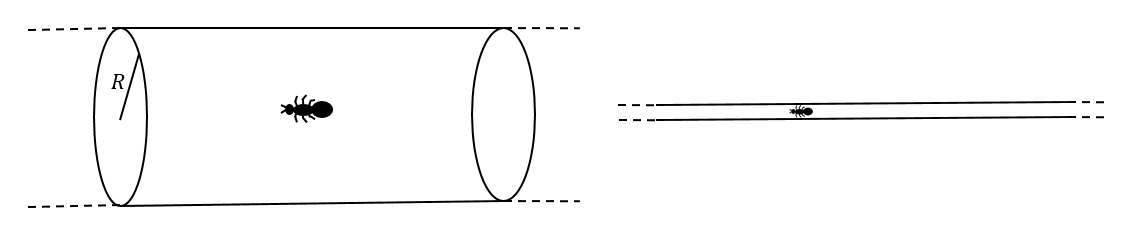
https://brilliant.org/wiki/string-theory/
Imagine an ant on a power line that can travel along the wire or around it. For the ant those are two distinct dimensions. If we zoom out to street level, we can only observe the ant moving along the wire one way or the other.

Conflict is often zoomed way too far out. If we started in close by using conflict resolution skills like agreeing on what we agree on (usually arguments surround small fractions of things while the core principles are agreed upon), we would tend to see that there are many dimensions of agreement despite the one or two ways we disagree.

Monday, November 28, 2016

Wordsmithing for Evil or for Good?

William Shakespeare was the consummate wordsmith. I always loved reading his plays in school, and given my penchant for passionate exterpolation, I have never limited myself to preexisting language when expressing myself. A good word play, portmanteau, or entendre can bring a moment from banal to blingin' in a sentence.

But there is danger in creating language too. What we say and how we say it to each other isn't just good fun. I have struggled with finding the hidden misogyny in my language since college (did you notice toughies like sportsMANship? Sometimes hidden misogyny is a manwich, sometimes it's manspread, but misogyny is everywhere man).

Richard B. Spencer is a dangerous man, and a dangerous wordsmith. As the progenitor of the phrase "Alt-Right," and leading voice in the white nationalist and neo-nazi movement, he has committed his life to hate in a way that damages the fabric of our nation. This Chrome ad on has just been created to help you out in correcting the linguistic damage currently being done by Spencer's abhorrent wordsmithing.

If this kind of nomenclature interests you (and you like movies like Pulp Fiction or have read some Sci Fi), I highly suggest you pick up the book Lord of Light by Roger Zelazny. The main character has some incredible moments with regard to how we speak and what we call things - I will leave you with a quote from the book that I believe sums up the danger and the power of words:

No word matters. But man forgets reality and remembers words.

Wednesday, November 9, 2016

Donald Trump and the New Rise of the American Blue Collar White Voter

Donald Trump just won the election. Besides the shock and unease, I have been filled with a few competing thoughts since the voting data showed that the election was going Donald's way around 8:15 last night. First and foremost I am disappointed in my fellow Americans. As turnout data ossifies in the coming weeks, I’m sure I will have many things to say about the story those numbers tell.

So far the numbers that stick out most to me show that only 1/3 of the population voted (roughly 1/3 is too young to vote, but aware of the definition of bullying since they are all snowflakes, so one can hope that they grow up to resist a bully like Donald). That means that since Donald won about half of the voters, roughly 3/4 of the eligible population thought it either didn’t matter or that they’d prefer Donald Trump as president.

Each person has a right to their say, and while I flirt with elitist mentalities about who should vote, if we hope to form a more perfect union, we must give each American the chance to cast a meaningful vote in elections. It is clear that the American public wants Donald Trump. Look at the map. Unless you live in NYC, DC, Philly, or a city in CA, your area voted for Donald. From the campaign staffers I've talked to, it seems like most of the targeted voters came out in droves, so the election wasn't lost by Hillary, it was won by Donald.

I keep wondering what the world would be like if the baby boomers had focused more on teaching people how to read, or instituted minimum wages that rose with the dollar, or taken a little less acid. Instead they have consistently spent many times more money than they had so they could falsely inflate their lifestyle. This cycle of over-consumption and bust is unhealthy, which helps explain why we have a gluttonously capitalistic and misogynistic president, again.

However, once I start to quaff that bottle of gripe juice,  I find myself unwilling to blame someone else. I am a white cis Millennial American man, and though I worked to help elect Hillary and wish to have the opportunity to vote for women and people of color in many future elections, I am part of the problem.

It’s hard to quantify the blinders I believe have been placed on me because of my privilege - I have had so many opportunities, and receive biased positive outcomes so often that no matter how “woke” I am or become, I will never be able to absorb what the world feels like from the perspective of either a white rust belt septuagenarian or an immigrant.  I would like to think that I am an ally to women, people of color, and anyone less fortunate than I, and when faced with opportunities to help others I try to do my level best to do those things.

It's obvious that the anger, frustration, and hopelessness of the rust belt is a real thing. What solutions can we come up with to address that? If towns and lifestyles are dying and industry has left, what can we do to fix that and bring renewed hope to people outside of large cities? Wisconsin voted for Donald because Hillary never visited it once during her campaign. She took it for granted, but the voters there roared to life and insisted that they have a say.

Perhaps as a result of privilege, I tend to be optimistic, so I resist the urge to lash out in superlatives and hyperbole about what evils that man may do. Either we live in a democracy or we do not, and seeing as I want to respect the institutions that I believe give us the power and prestige that we have, I would like to find some way to help empower our legislators to help the poeple who need it.

Tuesday, June 14, 2016

Feminism

Debated for about an hour tonight about some of the facets of shucking off the patriarchy, and there were a lot of ideas bandied about. The best metaphor of the evening compared the patriarchy to an old house. Yeah you could slap anew paint job on it or throw aluminum siding around it to preserve it for a generation, but if you really wanted to build your dream house, you'd gut it and save all the materials you could and redesign it from the bottom up.