I have been overwhelmed here by the complexity of the problem of education. It seems like a vicious circular highway where there’s an entry ramp every mile or so but very few exits, all with extremely high tolls. Because the local school is overcrowded, the kids come in two shifts, One for the first few hours of the day and the other after lunch. Every Friday the whole school has off for the teachers to “meet” and plan out curriculum. In total, kids in elementary school and middle school are getting 8-12 hours of school a week, and not even that if they don’t want to go to classes. Every morning at the youth center we work with four or five kids who, for whatever reason, haven’t gone to school that day. Never once have parents visibly checked up on this. There are 10 year olds who can read and write and are able to use the keyboard on the computers we have in the youth center with some alacrity. Typing away with one finger on their right hand as they makeamashofwordswithoutspaces. With a little coaching, these kids are able to copy out paragraphs from books, and I’ve even gotten a few of them email accounts and have them corresponding with Americans who came here to help build houses.
But for the vast majority of children and teens here, they don’t even know their own alphabet. They can’t write their own name, and they certainly couldn’t write down a sentence for you like “the dog is black”, in Spanish or English. It’s been an eye-opening process to begin teaching English to these kids. I’m less teaching English than I am trying to overcome a lifetime of wasted opportunity and learning that their parents, and the community around them has missed.
The schools themselves aren’t just ‘prisons’ in the sense of the American kid feeling bottled up and wanting anything but to sit inside on a warm May day. They are built by the same company that builds the prisons here. The 7 foot concrete walls surrounding the compounds are topped with barbed wire. The blocky inspirational art painted to the outsides of these walls does little to assuage the sense of blanked and bottled hope when the buildings inside are a bleak assortment of square concrete surrounded by trash-covered ground where kids spend more time at recess throwing rocks at one another than they do in class. The biggest benefit to school here seems to be that a few years ago they started providing lunch to the kids. This is incredible, but since they seem to not be feeding their minds, it’s still not all that good.
I have heard many an adult decry how “little kids are devils” or in Spanish “Los niños son Diablos” and then act as though that is the end of it. When you are being outsmarted, outwitted, and outdone by a 5 year old that seems less a matter of education to me than a matter of culture and parenting. In my first few weeks here, I was struck several times by the crying toddlers wandering the streets. When I would stop and try to help them out and give them care, I would invariably fail, and once a mother poked her head out of her front door to tell me to stop because the child’s mother was at work in a different town so there was nothing to be done.
These kids are all crying out for love and attention. There are quite a few who I have gotten to know in my 6 weeks here so far who come every day for simply a high five, and to use me as a jungle gym for a few minutes. I will ask them how their day is, and perhaps play them in a quick game or two of connect 4. The culture of letting children raise themselves here results in a continuation of the vicious cycle of poverty, ignorance, and blight. When a 14 or 15 year old girl is pregnant with her first child, and before that spent most of her childhood raising her little siblings, it’s hard to imagine anyone breaking out of the cycle.
Showing posts with label debate. Show all posts
Showing posts with label debate. Show all posts
Monday, March 20, 2017

Thursday, February 2, 2017
Using Emotions to Temper Decisions
Our days are filled with decisions. Some are important, but most just involve the minutiae of what we eat, wear, say, or do. Chances are you don't even notice many of the decisions you make each day. How we decide is a combination of our emotional state and our logical expectations about the social and practical functionality of the options. As a culture, we are against deciding things entirely because of emotion. This comes from Enlightenment thinking, colonial survivalism, and the threat of extinction due to an overly emotive leader with access to nuclear warheads.
Modern consumers are subjected to a daily barrage of surreptitious emotional messaging designed to make us buy things we don't need, but surely want. Two recently effective advertisers have been Apple and Coca-Cola. Apple sold "cool" for many years when the iPod and iPhone first came out, while Coca-Cola still has a stranglehold on the idea that when you open a can of coke, it brings happiness, family, and unbridled joy.
These nuclear and consumption based reasons might make you hesitate to ever use emotions when making decisions. However, I think that there is a space where you can use your emotions to make incredibly effective decisions.
We tend to ignore metallurgy in our expressions about 'temper.' People 'lose' their temper, can be in a 'bad' temper, or can have a 'fit' of temper. When talking about metal, it means to harden by heating and cooling. Imagine if we spoke about our emotions in terms that involved self control, strength, and conditioning, rather than unbridled fire. A blacksmith knows that a low and slow temper produces the hardest and brittlest metals while a hot and fierce temper produces softer, more flexible metal. So when you "lose your temper" it means you've lost control of your temperature and are either too hot or too cool.
When you are making important decisions, they should involve logical assessments about the costs and benefits of each option. This analysis should compare and contrast the short and longer term effects as well as who will be effected. One common method parents teach their children for important decisions is a pros and cons list. This involves a logical and equivalency based approach to deciding.
One of the most important decisions we make each summer at camp is our cabin assignments. Many camps assign their counselors different cabins based on seniority, or allow them to apply for a specific age group. Since our camp is small, and puts so much weight on community, we wait until most of the way through our staff training week before assigning cabins. Each cabin gets two counselors, who live and work together for the following 8-weeks.
This decision process always has a similar formula, but feels very different depending on the temper of the administrators. We will try to figure out the cabin pairings for one gender, then when emotions are overtaking logic, we switch genders. It takes 2-3 passes to get to a point where everyone is comfortable with the cabins. Sometimes the process can get contentious, and erupt in shouting and crass words. Far more often it is a passionate but reasoned discussion where we try to use our feelings about individuals, their histories and prospects, and the needs of the campers and camp to combine into a logic storm of happy goodness.
This decision is made without a time limit (besides getting tired) and with the promise that we will be unified at the conclusion. So while the stakes are high and potentially the success of the whole summer program lies in the decision, we can take our time, think things through, and rely on our cumulative wisdom to find a good solution. In this way, we can let emotions temper our decisions.
In an emergency, two things you don't have are time and the ability to come to consensus. You need a plan and a straightforward set of directions so that you can produce the most reliably good result that helps the most people and hurts the fewest. To prevent rash decisions you should bottle up your emotions during a crisis. Despite this, emotions have an important role to play in emergencies.
In general emotions are more useful in situations where there are multiple possible correct decisions, each with marginal benefits. We use a system of values to guide us in how to apply our emotion. If we feel strongly about something it may mean a particular solution’s marginal benefits should be chosen or discarded.
For 10 months spanning 2009 and 2010 a friend and I prepared for a 5-week trip to the Alaskan Bush. We weighed gear, compared caloric contents of various substances, and read volumes on wilderness survival and Alaska. We also created an emergency plan. We listed as many potential emergencies as we could, and then, from the calm of our own computers thousands of miles apart, debated and doctrinized our responses. This method allowed us the chance to inject emotion and values into our emergency responses without accessing that emotion during the emergency. We had already agreed what we do if one of our backpacks gets washed downstream, or if some of our food spoiled. This meant that as frustration or anger or hunger clouded our vision on the trip, we would still have the tempered response available.
Modern consumers are subjected to a daily barrage of surreptitious emotional messaging designed to make us buy things we don't need, but surely want. Two recently effective advertisers have been Apple and Coca-Cola. Apple sold "cool" for many years when the iPod and iPhone first came out, while Coca-Cola still has a stranglehold on the idea that when you open a can of coke, it brings happiness, family, and unbridled joy.
These nuclear and consumption based reasons might make you hesitate to ever use emotions when making decisions. However, I think that there is a space where you can use your emotions to make incredibly effective decisions.
We tend to ignore metallurgy in our expressions about 'temper.' People 'lose' their temper, can be in a 'bad' temper, or can have a 'fit' of temper. When talking about metal, it means to harden by heating and cooling. Imagine if we spoke about our emotions in terms that involved self control, strength, and conditioning, rather than unbridled fire. A blacksmith knows that a low and slow temper produces the hardest and brittlest metals while a hot and fierce temper produces softer, more flexible metal. So when you "lose your temper" it means you've lost control of your temperature and are either too hot or too cool.
When you are making important decisions, they should involve logical assessments about the costs and benefits of each option. This analysis should compare and contrast the short and longer term effects as well as who will be effected. One common method parents teach their children for important decisions is a pros and cons list. This involves a logical and equivalency based approach to deciding.
One of the most important decisions we make each summer at camp is our cabin assignments. Many camps assign their counselors different cabins based on seniority, or allow them to apply for a specific age group. Since our camp is small, and puts so much weight on community, we wait until most of the way through our staff training week before assigning cabins. Each cabin gets two counselors, who live and work together for the following 8-weeks.
This decision process always has a similar formula, but feels very different depending on the temper of the administrators. We will try to figure out the cabin pairings for one gender, then when emotions are overtaking logic, we switch genders. It takes 2-3 passes to get to a point where everyone is comfortable with the cabins. Sometimes the process can get contentious, and erupt in shouting and crass words. Far more often it is a passionate but reasoned discussion where we try to use our feelings about individuals, their histories and prospects, and the needs of the campers and camp to combine into a logic storm of happy goodness.
This decision is made without a time limit (besides getting tired) and with the promise that we will be unified at the conclusion. So while the stakes are high and potentially the success of the whole summer program lies in the decision, we can take our time, think things through, and rely on our cumulative wisdom to find a good solution. In this way, we can let emotions temper our decisions.
In an emergency, two things you don't have are time and the ability to come to consensus. You need a plan and a straightforward set of directions so that you can produce the most reliably good result that helps the most people and hurts the fewest. To prevent rash decisions you should bottle up your emotions during a crisis. Despite this, emotions have an important role to play in emergencies.
In general emotions are more useful in situations where there are multiple possible correct decisions, each with marginal benefits. We use a system of values to guide us in how to apply our emotion. If we feel strongly about something it may mean a particular solution’s marginal benefits should be chosen or discarded.
For 10 months spanning 2009 and 2010 a friend and I prepared for a 5-week trip to the Alaskan Bush. We weighed gear, compared caloric contents of various substances, and read volumes on wilderness survival and Alaska. We also created an emergency plan. We listed as many potential emergencies as we could, and then, from the calm of our own computers thousands of miles apart, debated and doctrinized our responses. This method allowed us the chance to inject emotion and values into our emergency responses without accessing that emotion during the emergency. We had already agreed what we do if one of our backpacks gets washed downstream, or if some of our food spoiled. This meant that as frustration or anger or hunger clouded our vision on the trip, we would still have the tempered response available.
Thursday, January 26, 2017
Prognostications After a Week with President Trump
President Trump has so far been an irresponsible leader. As someone who is comfortable (and in fact enjoys!) arguing for the opposite point of view in order to spur on arguments with friends, I often find myself trying to think through the logic of a viewpoint with which I disagree. Some of my most firmly held beliefs that differ from social norms have arisen from this method. The best example is my stance on personal recycling (it's a form of tax, doesn't matter, and is morally licensing, so I'll stick to reducing and reusing thank you very much).
So though I harbored many differences with candidate Donald Trump, I am fully prepared, especially in the presence of so many smug Bernie supporters in my social circle, to try to react to his policies with analysis rather than anger. So far he has demonstrated his usual callous and un-Christian attitude towards others as well as several massive violations of wisdom abut leadership and American institutions which I hold dear, and which history has shown are worthy of respect and adherence. For a good list of these, check out this weekly record.
Russell Simmons wrote an interesting opinion piece on Huffington Post today that I think gives us part of the picture. I've seen a few pieces articulating that even if somehow Trump got impeached, Democrats are in for a long, hard four years. Even assuming something Trump does causes Republicans in power to somehow decide it's worth jumping ship and impeach him, it would take a long time. Even Liberals who are shouting and waving their fists like Robert Reich think it'll be a while before they dump him. And lest the passionate among Democrats forget, President Pence wouldn't be an alliterative leader that propels the country forward.
The timing here could be very interesting. Democrats seem to have little hope of winning back either the House or the Senate in 2018. If things stay this way, Republicans could very well hide behind a smoke screen of their normal obfuscation while letting Trump parade around for two years, and then announce after winning, potentially a filibuster-proof majority, that the voters had endorsed Trump's policies, even though reality says the map and seats up for election favor them. If Trump manages to learn which crazy things warrant backlash and protests, and which fly under the radar, he could manage to be propped up for the entire four years, helping usher in an even stronger majority for Republicans.
If, on the other hand, the protests and political activism that may be coming combine with one or more Trump decisions that break through the cognitively dissonant support of some of his voters, a few things might happen:
No matter what happens over the coming weeks, months, and years in our American political experiment, I know two things about myself for certain. First, I will continue to help out political campaigns for candidates I support by canvassing. I love the walking, the fulfillment I get from meeting so many good people, and the knowledge that while I only vote once, I can get many more votes cast by putting shoe leather to pavement. Second, I will keep reading and talking and being optimistic. If I stay informed, and keep reading, I will know more about why things are happening, and be able to help spread this information in my circles.
So though I harbored many differences with candidate Donald Trump, I am fully prepared, especially in the presence of so many smug Bernie supporters in my social circle, to try to react to his policies with analysis rather than anger. So far he has demonstrated his usual callous and un-Christian attitude towards others as well as several massive violations of wisdom abut leadership and American institutions which I hold dear, and which history has shown are worthy of respect and adherence. For a good list of these, check out this weekly record.
Russell Simmons wrote an interesting opinion piece on Huffington Post today that I think gives us part of the picture. I've seen a few pieces articulating that even if somehow Trump got impeached, Democrats are in for a long, hard four years. Even assuming something Trump does causes Republicans in power to somehow decide it's worth jumping ship and impeach him, it would take a long time. Even Liberals who are shouting and waving their fists like Robert Reich think it'll be a while before they dump him. And lest the passionate among Democrats forget, President Pence wouldn't be an alliterative leader that propels the country forward.
The timing here could be very interesting. Democrats seem to have little hope of winning back either the House or the Senate in 2018. If things stay this way, Republicans could very well hide behind a smoke screen of their normal obfuscation while letting Trump parade around for two years, and then announce after winning, potentially a filibuster-proof majority, that the voters had endorsed Trump's policies, even though reality says the map and seats up for election favor them. If Trump manages to learn which crazy things warrant backlash and protests, and which fly under the radar, he could manage to be propped up for the entire four years, helping usher in an even stronger majority for Republicans.
If, on the other hand, the protests and political activism that may be coming combine with one or more Trump decisions that break through the cognitively dissonant support of some of his voters, a few things might happen:
- President Trump, who we all know loves to gild things, might start believing polls that show him as un-liked. Protests and woke former Trump supporters might make these numbers sink further and break even more starkly. President Trump might turtle up and keep at things, or change, or just quit. He's a maverick after all, and has said many times he doesn't need this job.
- Slow-moving lawsuits (you actually can't sue the President for things he does as part of his official capacity, FYI) and petitions and eventually articles of impeachment might make it to the house floor. With only a simple majority needed, that's currently 26 Republicans siding with the Democrats, and would be less if it happened after midterms and Democrats picked up some seats. While it would take 2/3 of the Senate, which means a lot of Republicans switching sides and seems pretty near impossible, perhaps just the threat of getting it passed in the house would cause Trump to change course or jump ship given that Alec Baldwin consistently gets under his skin for doing an impression on air.
- The Democrats start offering more leadership and more young, Millennial voices the chance to become part of the party. If protests galvanize the Democrats in a similar way to the Tea Party, the Millennial generation can grab hold of political power. The Democratic leadership in the Senate has recently broadened, but even the Millennials willing to get arrested to change the party are advocating for a 75-year old to take control over a party he doesn't even identify as a member of. This would take Millennials rising up and denying the snowflake aspersions cast our way with little thought. I love this idea.
- Civil servants, judges, and large institutions combine to create a lasting resistance to the destruction of democratic and social norms in which President Trump is constantly engaging. From the "Resist" banner by Greenpeace to the rogue Tweets by NPS, EPA, and NASA employees, everyone everywhere makes sure that their one vote (that they probably were too busy or apathetic to cast, hence Trump winning in the first place) is followed with a few hours of dedication to the American Dream that unifies and uplifts, instead of President Trump's "American Carnage" inauguration address.

No matter what happens over the coming weeks, months, and years in our American political experiment, I know two things about myself for certain. First, I will continue to help out political campaigns for candidates I support by canvassing. I love the walking, the fulfillment I get from meeting so many good people, and the knowledge that while I only vote once, I can get many more votes cast by putting shoe leather to pavement. Second, I will keep reading and talking and being optimistic. If I stay informed, and keep reading, I will know more about why things are happening, and be able to help spread this information in my circles.
Thursday, December 8, 2016
Conflict and Growth
People grow through conflict and discomfort. I was reminded of this recently by a Facebook post showing a lobster shedding its shell only when it grew too big and the pressure too high.
I spent a lot of time thinking about conflict while developing training modules for administrative and counselor training weeks at camp, and I have never come to a satisfactory conclusion about how to teach conflict.
When conducting exit interviews several months after the summer, each year one of the most cited examples of "staff issues" would involve a seminal argument in the staff lounge. I can't identify why it is that these conflicts hold so much power over people's perceptions, though I think there are several connected explanations:
First I think these arguments serve as a shorthand for other issues those people are already having. It's not that disagreeing about feminism (or change, or racism, or politics...) is all encompassing, it's that it embodies the laundry list of faults and unresolved disagreements each person sees in the other. When we don't like or get along perfectly with a person, we can use a public display of disagreement to justify those feelings even long afterwards.
Secondly I think people like things to be resolved. We like there to winners and losers, facts and liars, heroes and villains. When we can cast ourselves as heroically defending truth against some other, we feel good about ourselves. Many of the arguments that got cited were about topics that have no easy resolution, so to feel complete, we retreat to our well-worn opinions.
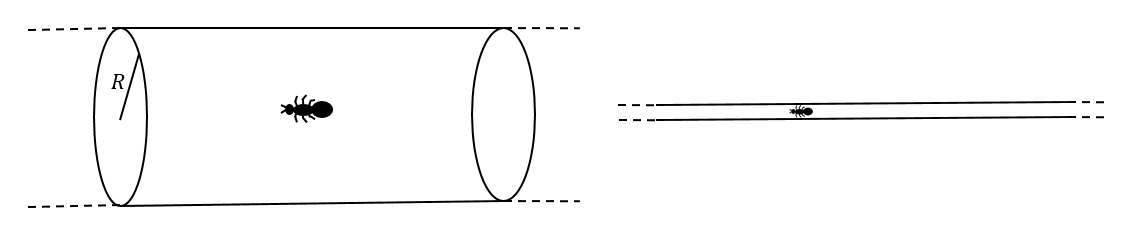
Thirdly I surmise that most people are bad at the process of conflict, and thus tend to see the argument at irreconcilably far from resolution when it is mostly a matter of viewpoint. I am reminded here of an example in a physics class I took in college that discussed string theory:
Imagine an ant on a power line that can travel along the wire or around it. For the ant those are two distinct dimensions. If we zoom out to street level, we can only observe the ant moving along the wire one way or the other.
Conflict is often zoomed way too far out. If we started in close by using conflict resolution skills like agreeing on what we agree on (usually arguments surround small fractions of things while the core principles are agreed upon), we would tend to see that there are many dimensions of agreement despite the one or two ways we disagree.
I spent a lot of time thinking about conflict while developing training modules for administrative and counselor training weeks at camp, and I have never come to a satisfactory conclusion about how to teach conflict.
When conducting exit interviews several months after the summer, each year one of the most cited examples of "staff issues" would involve a seminal argument in the staff lounge. I can't identify why it is that these conflicts hold so much power over people's perceptions, though I think there are several connected explanations:
First I think these arguments serve as a shorthand for other issues those people are already having. It's not that disagreeing about feminism (or change, or racism, or politics...) is all encompassing, it's that it embodies the laundry list of faults and unresolved disagreements each person sees in the other. When we don't like or get along perfectly with a person, we can use a public display of disagreement to justify those feelings even long afterwards.
Secondly I think people like things to be resolved. We like there to winners and losers, facts and liars, heroes and villains. When we can cast ourselves as heroically defending truth against some other, we feel good about ourselves. Many of the arguments that got cited were about topics that have no easy resolution, so to feel complete, we retreat to our well-worn opinions.
Thirdly I surmise that most people are bad at the process of conflict, and thus tend to see the argument at irreconcilably far from resolution when it is mostly a matter of viewpoint. I am reminded here of an example in a physics class I took in college that discussed string theory:
 |
| https://brilliant.org/wiki/string-theory/ |
Conflict is often zoomed way too far out. If we started in close by using conflict resolution skills like agreeing on what we agree on (usually arguments surround small fractions of things while the core principles are agreed upon), we would tend to see that there are many dimensions of agreement despite the one or two ways we disagree.
Monday, July 18, 2016
Spiritualism and Industrialism
Been having a series of discussions with a couple people about what benefits humans have from spirituality and religion that we have replaced with a reverence and idolatry of technology. As we have replaced collective activities in space (fewer mandatory community events, many people exist in separate bubbles, connecting only by choice through the internet and as their children's schedules dictate) with collectively reinforced beliefs through our own filters (facebook news feeds, online news filtering, getting to hear and read only things you already agree with) we have lost something fundamental and meaningful that we had before the industrial revolution because we had to focus on things closer to home.
This discussion has often started as a discussion about the divinity of Christ, or the differnces between Abrahamic and Christ doctrine in the bible - and out of that has come an active discussion on the ability of humans to be something more than their parts when combined. As in Christ was wholly human but able to make decisions that were divine - and so was able to be more through the use of the holy spirit than he could be by himself, much in the same way that through fellowship and compassion, we can be more together than we are individually.
These discussions have also focused on the reductionist tendencies of Donald Trump and the Tea Party / libertarian ideals espoused by many in the far right in America today. If we use politics to separate, and blame people for their life circumstances rather than asking what we can all do to make each other's lives better, then we are falling into a trap that will bring us backwards and make us less together than we would be alone.
David Brooks wrote a great article in the Times this weekend on this idea: The Governing Cancer of our Times
Queen Elizabeth II had a great speech in 2011 about a similar theme: UK and N. Ireland Peace
This discussion has often started as a discussion about the divinity of Christ, or the differnces between Abrahamic and Christ doctrine in the bible - and out of that has come an active discussion on the ability of humans to be something more than their parts when combined. As in Christ was wholly human but able to make decisions that were divine - and so was able to be more through the use of the holy spirit than he could be by himself, much in the same way that through fellowship and compassion, we can be more together than we are individually.
These discussions have also focused on the reductionist tendencies of Donald Trump and the Tea Party / libertarian ideals espoused by many in the far right in America today. If we use politics to separate, and blame people for their life circumstances rather than asking what we can all do to make each other's lives better, then we are falling into a trap that will bring us backwards and make us less together than we would be alone.
David Brooks wrote a great article in the Times this weekend on this idea: The Governing Cancer of our Times
Queen Elizabeth II had a great speech in 2011 about a similar theme: UK and N. Ireland Peace
Subscribe to:
Posts (Atom)