There is a lot to be learned both for and from the masons here in the Dominican Republic. Building something in the United States involves a trip to a well-stocked hardware store. Having wood is a matter of choosing which type of tree you’d like to use, balancing cost with durability. My New England born instructor of all things construction quickly taught me to pick up the smaller hardware before the larger wood so you don’t have to schlep wood all around the store. And of course, always stop by the contractors’ entrance for your free cup of coffee!
While building a house is fundamentally the same here as it is in the US, you need the same roof, walls, supports, windows, doors, and a foundation. But there are so many little differences. There are different size nails, but we don’t use screws, as there are no power tools. The one drill that the masons have uses a nail as a drill bit, and it’s only used for very small pieces of wood you don’t want to split when you nail into them. When choosing screws or nails in the US, you take the total width of your wood (say, 3”) and then buy something that is a little shorter (say 2.5” or 2.75”) so that the screws don’t pop out on the other side. While the nails here come in several sizes, none of those sizes have anything to do with the width of the wood you are using, simply how secure you need the wood to be. If the nails you are using poke through, either you don’t bother making it safer, or if you’re really feeling ambitious, you bend them downwards and upwards, roughly alternating.
There is strong ingenuity for recycling resources, and a strange stupidity in organizing supplies and tasks. We unbend hundreds of nails, making sure to get the most use out of all of them. And to save money, instead of filling the concrete walls with rebar to reinforce, the Dominicans use barbed wire stapled into the posts. The plywood that we use as a mold for pouring concrete was partially used when we started, and we use it over and over. Through our construction of concrete molds, we made sure to nail almost every nail in mostly, but then bend the last 1/8 of an inch over so that once the concrete had set, we could remove the nails (unbend them for reuse), and then pull the plywood out without ripping the nails through it.
The organizational skills that are lacking are quite frustrating from the American perspective. It is on the volunteers, many of whom have never done this work before, to anticipate where the masons are going to not think ahead, and try to get things done before them. Putting up a wall requires a bunch of steps, some of which take longer than others. Tacking in the barbed wire takes time, as does making the plywood moldings and reinforcing them. Carting sand, gravel, and concrete into a big pile and filling the walls with concrete doesn’t take as long, and neither does prying off moldings from completed sections. Yet somehow for every wall we have made through two different weeks of work, the masons instruct all the volunteers to focus on removing plywood and piling resources. Those of us who see the error in this thinking end up starting work crews to do the tasks that take more time under our own initiative, and often against resistance from the masons. It is a strange dance of having them needing to be right and in charge, but it being obvious to an American’s eyes that the process is inefficient.
There are other glaring examples of both ingenuity and lack of it. The Dominican soil around here is filled with rocks both small and large. Anywhere that the wall needs a few inches of concrete where there is no way to pour it in easily, we will fill the space as much as possible with rocks before adding tackier concrete that we’ve mixed without gravel. This way you can use less concrete to fill the space and still get a smooth(ish) finish. On the other hand, the masons insist on mixing all the concrete on literally the hardest to reach area from the piles of supplies. The piles of sand and gravel are right by the front of the house, where the dump truck could put them from the road. For some reason the masons insist on mixing concrete behind the house so that every wheelbarrow, bucket, and shovel of sand and gravel has to be carried the longest possible distance to a pile before being brought back most of the distance as mixed concrete to be put into the walls.
Not a day goes by where I am not made happy by the companionship and irresistible humor of my Dominican hosts, and also frustrated by the dearth of initiative and problem solving techniques. The whole thing epitomizes the American phrase of taking two steps forward and one backwards. Of course here, after you’ve done that, it’s time for a break to dance to some Bachata.
Showing posts with label adaptation. Show all posts
Showing posts with label adaptation. Show all posts
Monday, March 13, 2017

Wednesday, March 8, 2017
Poor is Poor the World Across
For about a month now I have been living and working in the Dominican Republic. Derrumbadero is a poor, rural village of around 3000 in the mountains in the South-West of the DR only a few short clicks away from the border with Haiti. With no running water and electricity only most days, and seldom on the weekends, it is a community that is poor in material wealth and opportunity, yet it persists.
One of the first things that I said to my new bosses was to authoritatively state that “Poor is poor the world across.” While aphoristic and null in literal content, it contains several veiled beliefs about humans that I have spent a lot of time here trying to unpack.
As an agricultural community where the houses lack any real privacy or ability to be secured, the men mostly spend their days in a series of Sisyphun tasks tending the fields and livestock while the women hover near the cookfire and the constantly stewing rice and beans without ever leaving the house empty lest some of their few existing possessions get up and walk away. The dance between constant friendly socializing and fearful protectionism is reminiscent of a stereotypical high-stakes socialite dinner party.
I meditate daily on the ladder that I have had access to in my life in contrast to the one they have here. For a few days early on in my trip I was torn by a problem I still see as unresolved: If I spend time helping and working here with some of the best and brightest, those who have the most potential and ambition to leave this village and head to Santo Domingo, the capital, in pursuit of work and opportunity and dreams, am I in fact contributing to the drain of resources from a place whose resources are already meager?
This brings me back to a few of the assertions inherent in the statement that “Poor is Poor the world across”. No matter the absolute value, anytime one set of people has less or more than another, it creates a gap which people seek to bridge. I have heard it said here (and is a quote from the amazing graphic novel Persepolis) that people only have so much room for pain before the only response left is to be happy. Here there is much to cause pain and much about which it is reasonable to be upset. The same is true for both poor and rich people all across the world. Part of our human condition is a state of constant comparison, judgement, and ultimately a journey towards self-fulfillment.
My host father here, Gonzalez, is a 65 year old man who takes joy in small jokes, and quietly exudes confidence, authority, and decency. He likely has had many reasons to be unhappy in his life, and certainly from my context has cause to be angry daily about the situation life has given him.
Instead, Gonzalez, along with many of the people here has responded to his life by finding joy. He greets each new day with the cheerfulness of a man who is feeding his chickens mere moments after the sun has risen. He straps on his machete, dons his rubber boots, and begins his daily care in the onion fields with a dulcet whistle. Each day ends with time spent around the warmth of a small urn arguing with friends about the relative merits of chemicals in agriculture, the weather, and of course, how I didn’t eat enough rice and beans at lunch.
One of the first things that I said to my new bosses was to authoritatively state that “Poor is poor the world across.” While aphoristic and null in literal content, it contains several veiled beliefs about humans that I have spent a lot of time here trying to unpack.
As an agricultural community where the houses lack any real privacy or ability to be secured, the men mostly spend their days in a series of Sisyphun tasks tending the fields and livestock while the women hover near the cookfire and the constantly stewing rice and beans without ever leaving the house empty lest some of their few existing possessions get up and walk away. The dance between constant friendly socializing and fearful protectionism is reminiscent of a stereotypical high-stakes socialite dinner party.
I meditate daily on the ladder that I have had access to in my life in contrast to the one they have here. For a few days early on in my trip I was torn by a problem I still see as unresolved: If I spend time helping and working here with some of the best and brightest, those who have the most potential and ambition to leave this village and head to Santo Domingo, the capital, in pursuit of work and opportunity and dreams, am I in fact contributing to the drain of resources from a place whose resources are already meager?
This brings me back to a few of the assertions inherent in the statement that “Poor is Poor the world across”. No matter the absolute value, anytime one set of people has less or more than another, it creates a gap which people seek to bridge. I have heard it said here (and is a quote from the amazing graphic novel Persepolis) that people only have so much room for pain before the only response left is to be happy. Here there is much to cause pain and much about which it is reasonable to be upset. The same is true for both poor and rich people all across the world. Part of our human condition is a state of constant comparison, judgement, and ultimately a journey towards self-fulfillment.
My host father here, Gonzalez, is a 65 year old man who takes joy in small jokes, and quietly exudes confidence, authority, and decency. He likely has had many reasons to be unhappy in his life, and certainly from my context has cause to be angry daily about the situation life has given him.
Instead, Gonzalez, along with many of the people here has responded to his life by finding joy. He greets each new day with the cheerfulness of a man who is feeding his chickens mere moments after the sun has risen. He straps on his machete, dons his rubber boots, and begins his daily care in the onion fields with a dulcet whistle. Each day ends with time spent around the warmth of a small urn arguing with friends about the relative merits of chemicals in agriculture, the weather, and of course, how I didn’t eat enough rice and beans at lunch.
Tuesday, January 24, 2017
The Weight of Cultural Norms
Traditions and rituals are really cool. As any athlete (or serious fan) will tell you, it is of the utmost importance that pregame rituals are followed exactly. As any serious camper will tell you, it is of the utmost importance that we sing a song before each assembly, that we cross our left hands over our rights during Friendship Circle, and that each cabin have an introductory gimmick for each campfire.
Rituals are part of what connects us with our pasts, and help us convince ourselves that how we lead our lives is valuable and will mean something to those who come after us. It doesn't actually matter if a pro ties their shoes the 'right' way before the game any more than it matters if a NHL player's beard has been grown out all playoffs long. If we sang songs at the end of assemblies at camp, it would be fine. We changed the location of the Assembly Area, which necessitated changing all of the meeting trees, and none of the activities suffered, nor did the Wee Little Tree suddenly wilt and die.
Rituals and traditions should have a purpose, or should be used for a purpose. And you should make sure to look over your big and little traditions in your workplace and see if they have value, or where they can be tweaked to add value. If we let traditions without value stay, we risk becoming culturally moss-covered as we join Kodak in the museum.
One of the things that gives traditions at camp so much weight is that the property and culture feel stuck in time. It is impossible to be at camp and not feel as though the barefoot fun is exactly the same today as it was in 1928 when camp was founded. Because of this, traditions and rituals cut both ways. We can tell people that "This is how we do things/treat people" and have them believe it is important because that's how it's always been. But we are also limited in what we can try out and do if it doesn't fit existing cultural expectations.
I was reminded of this cultural limitation today when I saw a post on Facebook from an alumni from the 50s and 60s showing a Brown versus Green canoe challenge sheet. In my 20 years at camp, we have strongly opposed the idea of having a "Color War" under the premise that fixed-pie competition has little place at camp. While we've added a few things like a new version of Crew Olympics with individual champions, and the new running game Into The Deep with a single champion of camp, we still chaff against any hint of labeling anyone a winner at the cost of labeling someone else a loser.
In the end, cultural norms are delicate and finely crafted, which few people realize. It may seem like the Mean Girls' cafeteria has always been stratified that way, but remember how much work Regina had to do to keep control. All it took to unravel her was a few calteen bars and a rule about sweatpants. Take a long look at the big picture values you want for your culture, and then think of ways that you already do things that can embody those values, and ways you can tweak your norms to further those values. Ask others for their input in this process, toss up ideas, give away credit. Take culture seriously and it will reward you and your business.
Rituals are part of what connects us with our pasts, and help us convince ourselves that how we lead our lives is valuable and will mean something to those who come after us. It doesn't actually matter if a pro ties their shoes the 'right' way before the game any more than it matters if a NHL player's beard has been grown out all playoffs long. If we sang songs at the end of assemblies at camp, it would be fine. We changed the location of the Assembly Area, which necessitated changing all of the meeting trees, and none of the activities suffered, nor did the Wee Little Tree suddenly wilt and die.
Rituals and traditions should have a purpose, or should be used for a purpose. And you should make sure to look over your big and little traditions in your workplace and see if they have value, or where they can be tweaked to add value. If we let traditions without value stay, we risk becoming culturally moss-covered as we join Kodak in the museum.
One of the things that gives traditions at camp so much weight is that the property and culture feel stuck in time. It is impossible to be at camp and not feel as though the barefoot fun is exactly the same today as it was in 1928 when camp was founded. Because of this, traditions and rituals cut both ways. We can tell people that "This is how we do things/treat people" and have them believe it is important because that's how it's always been. But we are also limited in what we can try out and do if it doesn't fit existing cultural expectations.
I was reminded of this cultural limitation today when I saw a post on Facebook from an alumni from the 50s and 60s showing a Brown versus Green canoe challenge sheet. In my 20 years at camp, we have strongly opposed the idea of having a "Color War" under the premise that fixed-pie competition has little place at camp. While we've added a few things like a new version of Crew Olympics with individual champions, and the new running game Into The Deep with a single champion of camp, we still chaff against any hint of labeling anyone a winner at the cost of labeling someone else a loser.
In the end, cultural norms are delicate and finely crafted, which few people realize. It may seem like the Mean Girls' cafeteria has always been stratified that way, but remember how much work Regina had to do to keep control. All it took to unravel her was a few calteen bars and a rule about sweatpants. Take a long look at the big picture values you want for your culture, and then think of ways that you already do things that can embody those values, and ways you can tweak your norms to further those values. Ask others for their input in this process, toss up ideas, give away credit. Take culture seriously and it will reward you and your business.
Thursday, December 8, 2016
Conflict and Growth
People grow through conflict and discomfort. I was reminded of this recently by a Facebook post showing a lobster shedding its shell only when it grew too big and the pressure too high.
I spent a lot of time thinking about conflict while developing training modules for administrative and counselor training weeks at camp, and I have never come to a satisfactory conclusion about how to teach conflict.
When conducting exit interviews several months after the summer, each year one of the most cited examples of "staff issues" would involve a seminal argument in the staff lounge. I can't identify why it is that these conflicts hold so much power over people's perceptions, though I think there are several connected explanations:
First I think these arguments serve as a shorthand for other issues those people are already having. It's not that disagreeing about feminism (or change, or racism, or politics...) is all encompassing, it's that it embodies the laundry list of faults and unresolved disagreements each person sees in the other. When we don't like or get along perfectly with a person, we can use a public display of disagreement to justify those feelings even long afterwards.
Secondly I think people like things to be resolved. We like there to winners and losers, facts and liars, heroes and villains. When we can cast ourselves as heroically defending truth against some other, we feel good about ourselves. Many of the arguments that got cited were about topics that have no easy resolution, so to feel complete, we retreat to our well-worn opinions.
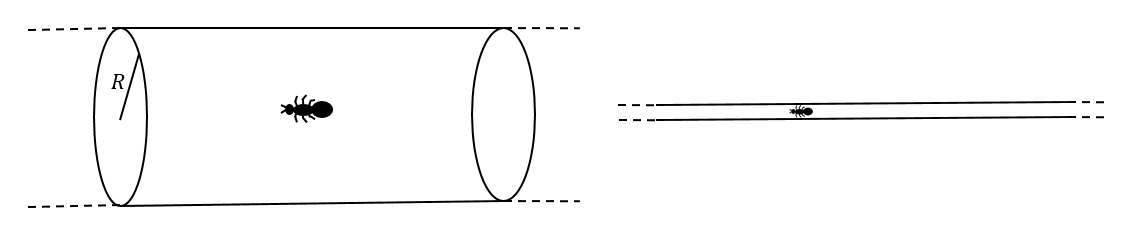
Thirdly I surmise that most people are bad at the process of conflict, and thus tend to see the argument at irreconcilably far from resolution when it is mostly a matter of viewpoint. I am reminded here of an example in a physics class I took in college that discussed string theory:
Imagine an ant on a power line that can travel along the wire or around it. For the ant those are two distinct dimensions. If we zoom out to street level, we can only observe the ant moving along the wire one way or the other.
Conflict is often zoomed way too far out. If we started in close by using conflict resolution skills like agreeing on what we agree on (usually arguments surround small fractions of things while the core principles are agreed upon), we would tend to see that there are many dimensions of agreement despite the one or two ways we disagree.
I spent a lot of time thinking about conflict while developing training modules for administrative and counselor training weeks at camp, and I have never come to a satisfactory conclusion about how to teach conflict.
When conducting exit interviews several months after the summer, each year one of the most cited examples of "staff issues" would involve a seminal argument in the staff lounge. I can't identify why it is that these conflicts hold so much power over people's perceptions, though I think there are several connected explanations:
First I think these arguments serve as a shorthand for other issues those people are already having. It's not that disagreeing about feminism (or change, or racism, or politics...) is all encompassing, it's that it embodies the laundry list of faults and unresolved disagreements each person sees in the other. When we don't like or get along perfectly with a person, we can use a public display of disagreement to justify those feelings even long afterwards.
Secondly I think people like things to be resolved. We like there to winners and losers, facts and liars, heroes and villains. When we can cast ourselves as heroically defending truth against some other, we feel good about ourselves. Many of the arguments that got cited were about topics that have no easy resolution, so to feel complete, we retreat to our well-worn opinions.
Thirdly I surmise that most people are bad at the process of conflict, and thus tend to see the argument at irreconcilably far from resolution when it is mostly a matter of viewpoint. I am reminded here of an example in a physics class I took in college that discussed string theory:
 |
| https://brilliant.org/wiki/string-theory/ |
Conflict is often zoomed way too far out. If we started in close by using conflict resolution skills like agreeing on what we agree on (usually arguments surround small fractions of things while the core principles are agreed upon), we would tend to see that there are many dimensions of agreement despite the one or two ways we disagree.
Wednesday, November 23, 2016
Personal Kryptonite and First Impressions
One of the most successful millennials I know explained to a group of us that her professional kryptonite is incompetence. She further defined that to include people who don't try, saying that when someone is trying hard, she can work with them to improve. Getting people to try is the hardest and most important aspect of management.
While she was being a big sarcastic and bombastic, it got me thinking a little bit more about how our personal preferences influence the way we get our staff to be intrinsically motivated to perform at their best. First impressions are key, both for the employer and the employee, and it is important that we stay true to ourselves in how we present in those key moments, otherwise we will create unsustainable personas that people will soon see through.
If you, like my friend, truly value competence, make sure that is communicated through your attire, body language, and opening words with new employees. You can do this for any value you have. You should also make use of your physical surroundings.
Assuming you have succeeded in engendering your intended values with an intentional first impression, you still have to actively create an environment that continues that value and regularly use implicit and explicit methods of keeping that value around.
One of the most important values to me is working hard and working efficiently. One way I like to show to my staff at camp that I value those two things is that I will try to identify whatever task in a given situation or project will be the hardest or most complicated or involved and publicly work on that task whilst teaching staff (and campers since I know the campers will one day be staff so it's never too early to get them competent). Since a large portion of jobs at camp are dirty or gross, this often means doing my best Mike Rowe imitation and getting dirty.
You don't always have to get dirty, and you don't always have to do the hardest task publicly, but showing your staff that what they are doing matters and is not beneath anyone is a powerful method of motivating them, since it validates their effort and allows them to picture themselves transitioning from their entry level job into a manager or executive. The new CEO of JC Penny, Marvin Ellison, is a paragon of this executive virtue, and it's paying off.
While she was being a big sarcastic and bombastic, it got me thinking a little bit more about how our personal preferences influence the way we get our staff to be intrinsically motivated to perform at their best. First impressions are key, both for the employer and the employee, and it is important that we stay true to ourselves in how we present in those key moments, otherwise we will create unsustainable personas that people will soon see through.
If you, like my friend, truly value competence, make sure that is communicated through your attire, body language, and opening words with new employees. You can do this for any value you have. You should also make use of your physical surroundings.
Assuming you have succeeded in engendering your intended values with an intentional first impression, you still have to actively create an environment that continues that value and regularly use implicit and explicit methods of keeping that value around.
One of the most important values to me is working hard and working efficiently. One way I like to show to my staff at camp that I value those two things is that I will try to identify whatever task in a given situation or project will be the hardest or most complicated or involved and publicly work on that task whilst teaching staff (and campers since I know the campers will one day be staff so it's never too early to get them competent). Since a large portion of jobs at camp are dirty or gross, this often means doing my best Mike Rowe imitation and getting dirty.
You don't always have to get dirty, and you don't always have to do the hardest task publicly, but showing your staff that what they are doing matters and is not beneath anyone is a powerful method of motivating them, since it validates their effort and allows them to picture themselves transitioning from their entry level job into a manager or executive. The new CEO of JC Penny, Marvin Ellison, is a paragon of this executive virtue, and it's paying off.
Friday, June 17, 2016
Tower Building
Tower Building Write Up
Did this activity today and it was incredibly well received. Had the counselors add their blocks one by one, and then break up into groups to help each other come up with six items to put on the second block. Then they added them while sharing their favorite, then broke into groups again to do the third block.
In the end, the debrief included everything I could have possibly wanted about how the tower metaphor applied to each person individually (and uniquely) and also that we as a staff build a tower together each day of camp. People really responded well to the metaphor wrapped in a literal tower!
My favorite response someone gave was Jake saying "Guys you realize that all of these 72 blocks say things that each of us is capable of doing on a day to day basis? This means we can all be amazing counselors, we just have to try" (Paraphrased...)
Did this activity today and it was incredibly well received. Had the counselors add their blocks one by one, and then break up into groups to help each other come up with six items to put on the second block. Then they added them while sharing their favorite, then broke into groups again to do the third block.
In the end, the debrief included everything I could have possibly wanted about how the tower metaphor applied to each person individually (and uniquely) and also that we as a staff build a tower together each day of camp. People really responded well to the metaphor wrapped in a literal tower!
My favorite response someone gave was Jake saying "Guys you realize that all of these 72 blocks say things that each of us is capable of doing on a day to day basis? This means we can all be amazing counselors, we just have to try" (Paraphrased...)
Tuesday, May 10, 2016
Managing Them Out of a Distraction or Irrational Behavior
When adding a millennial to a working team or project, they are just as able as any other generation to observe a task or process in place and then place themselves inside.
When working in a small group of two-four people, everyone is constantly making micro-judgements about many aspects of the group. From the work ethic to the process/product balance, employees use many environmental and managerial signals to determine what to do and when. Since employees must balance their energy level, life outside work, and social situations, we know that they are often distracted or irrational in their approach to work.
Millennials have several unique characteristics that make managing them out of their distraction or irrational behavior easier:
When working in a small group of two-four people, everyone is constantly making micro-judgements about many aspects of the group. From the work ethic to the process/product balance, employees use many environmental and managerial signals to determine what to do and when. Since employees must balance their energy level, life outside work, and social situations, we know that they are often distracted or irrational in their approach to work.
Millennials have several unique characteristics that make managing them out of their distraction or irrational behavior easier:
- The language of the internet is chock full of things to be explained. No one is more open to learning than someone who is teaching, so getting a millennial to teach you something about the nearly infinitely new internet age makes them ripe for guidance. Education is a two way street and they are an expert.
- Since the distraction can sometimes be technology induced, but many jobs require computers and being available 24/7, this can pose a nasty conundrum. This is where establishing a culture makes all the difference. Most jobs have an existing culture of how they use technology, so rather than creating a culture, you have to change things. See post on the process of cultural/organizational change. If you change your culture to create times where your staff are free from technology and instead have to rely on each other as people, you will have a much stronger team. Which is more, your millennials are hungry for this kind of deep social interaction. The narrowness of social engagement online causes this.
- Millennials like to be liked. Use that to your advantage instead of complaining that they have inflated senses of worth. You could go touchey-feely and write your millennials personal notes. You can go parody and make a twitter "wall". You can go statistician and prepare a report for them of the value they bring to the company. You can post positive results of recent customer surveys. You can create an annual social event designed specifically for millennials. You could pay them a pension.
Change involves Discourse. President Obama is a Master
Of course a general would match their strategy to their army, opponent, and geography among many other considerations.
To do otherwise would be foolish and potentially disastrous. So too
should a manager. If millennials are lacking in a skill or personality
trait, don't just get angry. Get a plan and take action.
President Obama on "How Change Happens" during Howard Commencement Address:
"You see, change requires more than righteous anger. It requires a program, and it requires organizing. … We remember Dr. King’s soaring oratory, the power of his letter from a Birmingham jail, the marches he led. But he also sat down with President Johnson in the Oval Office to try and get a Civil Rights Act and a Voting Rights Act passed. ...Brittany Packnett, a member of the Black Lives Matter movement and Campaign Zero, one of the Ferguson protest organizers, she joined our Task Force on 21st Century Policing. Some of her fellow activists questioned whether she should participate. She rolled up her sleeves and sat at the same table with big city police chiefs and prosecutors. And because she did, she ended up shaping many of the recommendations of that task force. And those recommendations are now being adopted across the country — changes that many of the protesters called for. If young activists like Brittany had refused to participate out of some sense of ideological purity, then those great ideas would have just remained ideas. But she did participate. And that’s how change happens."
President Obama on "How Change Happens" during Howard Commencement Address:
"You see, change requires more than righteous anger. It requires a program, and it requires organizing. … We remember Dr. King’s soaring oratory, the power of his letter from a Birmingham jail, the marches he led. But he also sat down with President Johnson in the Oval Office to try and get a Civil Rights Act and a Voting Rights Act passed. ...Brittany Packnett, a member of the Black Lives Matter movement and Campaign Zero, one of the Ferguson protest organizers, she joined our Task Force on 21st Century Policing. Some of her fellow activists questioned whether she should participate. She rolled up her sleeves and sat at the same table with big city police chiefs and prosecutors. And because she did, she ended up shaping many of the recommendations of that task force. And those recommendations are now being adopted across the country — changes that many of the protesters called for. If young activists like Brittany had refused to participate out of some sense of ideological purity, then those great ideas would have just remained ideas. But she did participate. And that’s how change happens."
Subscribe to:
Posts (Atom)